
- All
- Product Name
- Product Keyword
- Product Model
- Product Summary
- Product Description
- Multi Field Search
Views: 0 Author: Site Editor Publish Time: 2026-10-14 Origin: Site


Designing a robust framework requires a delicate balancing act. Manufacturers and engineers constantly weigh variables like absolute strength, overall weight, aesthetic appeal, and material cost. Walk onto any busy fabrication floor, and you will frequently face a critical decision when selecting materials for demanding physical applications. The two undisputed champions of this arena are the 6061 and 6063 grades.
Both of these materials belong to the 6000 series. This means they are primarily alloyed with magnesium and silicon. Yet, despite their shared metallurgical roots, their specific properties make them suited for entirely different structural environments. This comprehensive guide breaks down the debate with empirical data. We will compare mechanical strength, machinability, and real-world applications to help you make the perfect Alloy Choice for your next project.
The Structural Workhorse: The 6061 grade offers superior yield strength and load-bearing capabilities. This is absolutely essential for heavy-duty frames, industrial platforms, and high-stress applications.
The Architectural Champion: The 6063 grade is celebrated for its exceptional formability and flawless surface finish potential. It is the perfect selection for visible, light-duty frames.
The Engineering Trade-off: The core of this material debate centers on absolute mechanical strength versus die wear reduction and aesthetic excellence.
Cost and Safety: Making the correct selection prevents costly over-engineering. Specifying expensive high-strength alloys when not required wastes budget. Conversely, prioritizing aesthetics over load capacity risks catastrophic frame failure.
To make an informed decision for your project, you must first understand the metallurgical foundation of these materials. 6061 Aluminum is one of the most versatile and highly regarded heat-treatable alloys in the global manufacturing industry. Originally developed in the 1930s, it has become the standard material for applications requiring a robust balance of mechanical strength and overall structural integrity.
The defining characteristic of this metal lies in its specific chemical composition. Its primary alloying elements are magnesium, typically ranging from 0.8% to 1.2%, and silicon at 0.4% to 0.8%. The combination of these two elements allows the material to form magnesium silicide. This makes the alloy highly responsive to precipitation hardening. Furthermore, it contains small but significant additions of copper and chromium. These trace elements significantly increase the absolute tensile strength and rigidity of the raw billet.
Due to its impressive mechanical properties, engineers frequently refer to it as structural aluminum. Its primary strengths include an exceptional strength-to-weight ratio, high fatigue resistance, and predictable CNC machinability.
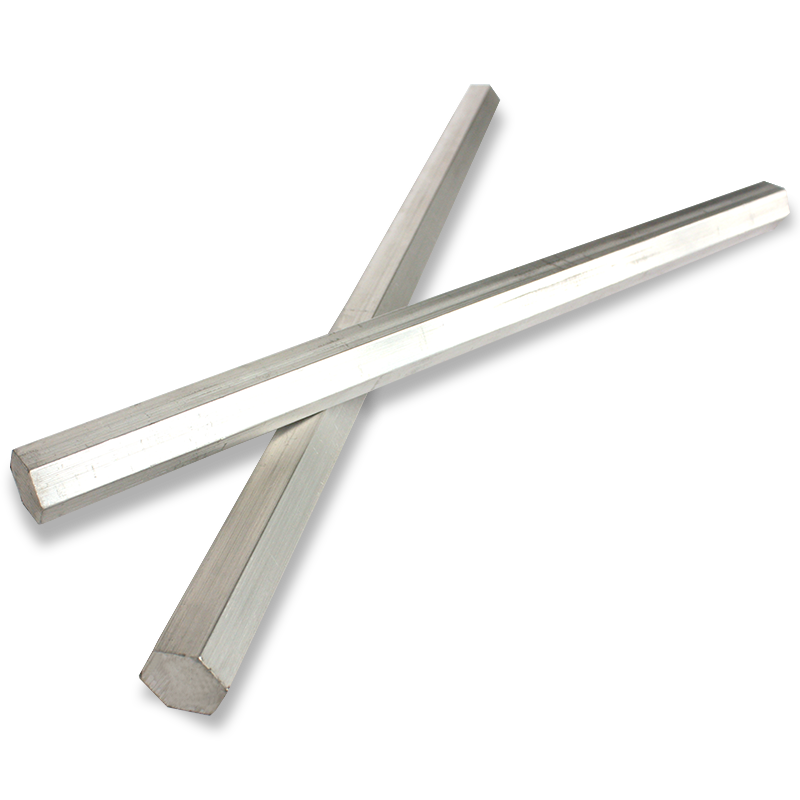
While the former dominates the heavy-duty sector, the 6063 grade holds undisputed dominance in the custom profile and aesthetic framing space. It also relies on magnesium and silicon for its heat-treatable properties. However, its exact chemical makeup is deliberately formulated to prioritize workability over brute strength.
The chemical composition features significantly lower amounts of alloying elements. It contains roughly 0.45% to 0.9% magnesium and 0.2% to 0.6% silicon. More importantly, it lacks the copper and chromium additions found in its stronger counterpart. This lower overall alloy content makes the metal much softer at elevated temperatures.
Because of its specific formulation, this grade is universally known as architectural aluminum. The softer nature of the heated alloy allows it to be forced through intricate steel dies with minimal resistance. This enables manufacturers to create highly complex cross-sections that would otherwise be impossible or prohibitively expensive to produce.
When evaluating these two metals, the most critical metrics for engineers are their mechanical and physical properties. To ensure an accurate comparison, it is standard practice to evaluate both alloys in their most common T6 temper, which indicates they have been solution heat-treated and artificially aged.
Property (T6 Temper) | 6061 Aluminum | 6063 Aluminum |
|---|---|---|
Yield Strength | ~40,000 psi | ~31,000 psi |
Ultimate Tensile Strength | ~45,000 psi | ~35,000 psi |
Brinell Hardness | 95 HB | 73 HB |
Machinability | Excellent (Crisp chips) | Fair (Can be gummy) |
Anodizing Quality | Good (Slightly matte) | Excellent (Highly vibrant) |
From an engineering standpoint, yield strength dictates the exact threshold a material can endure before it suffers permanent plastic deformation. The 6061-T6 variant boasts a yield strength of approximately 40,000 psi. This is nearly 30 percent higher than the 31,000 psi yield strength of the 6063-T6 alternative.
In practical terms, a frame constructed from the stronger alloy can hold significantly more static and dynamic weight. Imagine building a gantry system, a heavy-duty conveyor base, or a platform meant to support industrial robotics. In these scenarios, the higher yield strength provides the necessary safety factor. It prevents catastrophic bending under heavy, shifting loads.
Hardness directly correlates to a material's resistance to surface indentation, scratching, and mechanical wear. As seen in the data above, the structural grade is considerably harder.
In harsh industrial environments where forklifts, heavy tools, and moving parts constantly interact with the framework, the harder frame will resist denting far better. Interestingly, both alloys share the exact same Modulus of Elasticity at 68.9 GPa. This means that under very light loads, both materials will deflect or flex by the exact same amount. The difference is simply that the architectural grade will permanently bend much sooner as the load increases.
Beyond the final structural properties, your material selection heavily impacts the manufacturing process on the shop floor. The way a metal responds to cutting tools, welding arcs, and forming dies will directly influence your project lead time and total cost.
If your project requires extensive post-processing, the structural grade is the superior choice. Operations like drilling precise mounting holes, milling pockets for bearings, or tapping threads demand a rigid material. Due to its higher hardness and specific alloying elements, it chips beautifully when cut. It produces small, manageable chips that easily evacuate from the cutting zone. This behavior drastically reduces tool wear and prevents built-up edge on your expensive endmills.
Conversely, the architectural grade is softer and more ductile. When machined at high speeds, it tends to act gummy. Instead of breaking into clean chips, it often produces long, continuous stringers that can wrap around tooling. Machining this softer metal requires highly sharp, high-rake-angle tooling and generous coolant application to achieve a clean surface finish without tearing.
While one wins in the CNC mill, the softer 6063 alloy is the undisputed king of Extrusion. Because it has a lower flow stress at elevated temperatures, it moves through the die much faster and with significantly less friction.
If your design requires intricate internal webs, highly complex T-slots, screw bosses, or ultra-thin walls, this softer alloy is often the only viable option. Attempting to push a harder, high-strength billet through a highly complex, thin-walled die can result in tearing, severe die wear, or complete die failure.
Both options exhibit excellent weldability, making them highly suitable for fabricated assemblies. TIG and MIG welding are commonly used across the industry. Fabricators typically utilize ER4043 or ER5356 filler wire depending on whether the final assembly requires post-weld anodizing or maximum shear strength.
However, engineers must account for the heat-affected zone. Welding applies immense localized heat, which essentially undoes the T6 heat treatment in the area immediately surrounding the weld. Both metals will lose a significant portion of their yield strength in this zone unless the entire welded frame is post-weld heat-treated. Since full-frame heat treatment is rarely practical for large assemblies, designers must reinforce critical welded joints.
For many consumer-facing applications, the way the framework looks is just as critical as how it performs. The chemical composition plays a massive role in the final cosmetic appearance.
Anodizing is an electrochemical process that thickens the natural oxide layer. This increases durability and allows for vibrant color dyeing. The architectural grade responds exceptionally well to both clear and color anodizing. Because it lacks heavy alloying elements like copper and chromium, the resulting anodic layer is highly transparent, uniform, and vibrant. This is exactly why high-end retail displays and premium consumer electronics almost exclusively utilize it.
In contrast, the structural grade often yields a less aesthetically pleasing finish. The higher concentrations of magnesium silicide and copper can cause the clear anodized finish to look slightly dull, matte, or yellowish-gray. When dyed black or dark colors, it can sometimes exhibit a blotchy appearance across large flat surfaces.
Both materials naturally form a passivation layer of aluminum oxide when exposed to oxygen. This provides excellent baseline corrosion resistance. However, the architectural grade holds a slight edge in raw weather resistance. The copper content in the stronger alloy makes it marginally more susceptible to galvanic corrosion in highly corrosive environments, such as marine applications or areas with heavy road salt exposure.
Recent shifts in advanced manufacturing have dramatically reshaped how engineers specify these metals. The rapid expansion of electric vehicle production and automated warehouse robotics has heavily influenced material pipelines. Designers are constantly pushed to lightweight their structures without compromising rigidity.
We are seeing the 6061 grade remain the strict standard for battery enclosures and robotic chassis due to stringent crash-test ratings and dynamic load requirements. Meanwhile, the 6063 grade is experiencing a massive surge in demand for solar panel mounting frames and lightweight modular conveyor systems. In these green-energy and logistics sectors, rapid formability and outdoor weather resistance simply outpace the need for maximum brute strength.
Translating these material properties into real-world applications is the final step in the engineering process. The decision should be dictated by the specific demands of the final assembly. Making the wrong choice can severely impact your bottom line.
In the realm of heavy industry, strength and safety are non-negotiable. Applications such as CNC machine bases, automated robotic work cells, heavy-duty material handling carts, and load-bearing mezzanines require maximum rigidity. In these scenarios, the structural grade is the clear winner. The ability to withstand high dynamic loads, resist impacts from heavy machinery, and provide secure anchoring points makes it indispensable.
If the assembly is not supporting massive industrial loads, prioritizing formability and aesthetics becomes the most logical engineering choice. Applications such as trade show booths, laboratory cleanroom enclosures, custom retail displays, and aesthetic architectural supports are perfect candidates for the softer grade. It provides more than enough strength to support light static loads while offering the flawless, premium finish that demanding clients expect.
The modular T-slot market is a perfect case study for this dynamic. The vast majority of standard T-slot profiles on the market are extruded from the softer architectural alloy. The complex internal geometries of a T-slot feature sharp internal corners, thin retaining lips, and hollow centers. These shapes are incredibly difficult to produce efficiently using harder metals. However, for specialized heavy-duty profiles designed specifically for high-stress industrial applications, manufacturers will simplify the die design to allow for high-strength extrusion.
To ensure the success of your next Structural Frame project, consider these practical insights from experienced manufacturing engineers:
Do Not Over-Engineer: Avoid defaulting to the strongest option simply because the numbers look better on paper. If your framework does not carry heavy dynamic loads, utilizing a softer, more formable alloy will save manufacturing costs, reduce production difficulties, and provide a much cleaner aesthetic.
Mind the Sharp Corners: If your design requires profiles with very sharp internal corners or ultra-thin walls, choosing the architectural grade significantly reduces the risk of tearing the extrusion die during manufacturing.
Blend Your Materials: In complex engineering projects, clever designers use high-strength alloys for the hidden, load-bearing core skeleton. They then utilize the architectural grade for the visible, aesthetic outer shell. This achieves an optimal balance of strength and beauty.
Use this simple checklist to finalize your material selection before sending your designs to the fabrication floor.
Choose the 6061 grade if:
High yield strength and maximum load-bearing capacity are absolute requirements.
The assembly will be subjected to high stress, heavy vibration, or sudden impact.
The manufacturing process requires extensive CNC machining, drilling, and tapping.
Cosmetic aesthetics are secondary to raw structural integrity.
Choose the 6063 grade if:
You need custom, highly complex cross-sectional profiles extruded with tight tolerances.
The framework will be highly visible and requires a flawless, color-anodized cosmetic finish.
The application is light-to-medium duty, such as architectural trim or light enclosures.
Corrosion resistance in outdoor environments is a top priority for the product lifecycle.
The debate between these two prominent metals has a clear verdict. Rely on the structural grade for brute strength and heavy industrial frameworks. Conversely, choose the architectural grade for complex shapes, light assemblies, and beautiful aesthetic finishes.
Ultimately, your decision depends on a careful analysis of your project requirements, budget constraints, and aesthetic goals. Whether you are designing a custom automated enclosure or need specific high-strength components, partnering with an experienced material supplier ensures success. Explore the right 6063 Aluminum profiles and high-strength hex bars for your exact specifications to keep your production running smoothly.
The 6061 grade is significantly stronger. When evaluated in the T6 temper, it has a yield strength of roughly 40,000 psi, whereas its counterpart has a yield strength of about 31,000 psi. This nearly 30 percent difference in yield strength makes the former the superior choice for heavy-duty load-bearing applications.
Yes, you can easily weld these two metals together. Because both belong to the 6000-series family, they are highly compatible during the welding process. Fabricators typically use a standard filler metal like ER4043 or ER5356 to join them seamlessly.
The raw material cost for both alloys is very similar and fluctuates with the global commodities market. However, the architectural grade can sometimes be more cost-effective for custom shapes. Because it is softer, it is easier and faster to push through a die. This drastically reduces manufacturing time and expensive tooling wear.
You should only make this substitution if the original framework was heavily over-engineered for its intended load. Because the architectural grade has a lower yield strength, substituting it in an assembly designed specifically for high load-bearing capacity could lead to permanent bending or structural failure. Always consult a structural engineer before swapping materials.
Bending this strong alloy requires careful attention to the temper. In its fully hardened T6 state, it is quite brittle and prone to cracking if bent past a very shallow radius. If your design requires sharp bends, it is highly recommended to form the material in the softer T0 or T4 state, and then heat-treat it to T6 after forming.
While both offer good natural corrosion resistance, the 6063 grade performs slightly better in harsh marine environments. The 6061 grade contains higher levels of copper, which makes it marginally more susceptible to galvanic corrosion when exposed to saltwater and sea spray over long periods.


