
- All
- Product Name
- Product Keyword
- Product Model
- Product Summary
- Product Description
- Multi Field Search
Views: 0 Author: Site Editor Publish Time: 2026-10-30 Origin: Site


Procurement managers and manufacturing operators share a common nightmare. You receive a new batch of raw materials, load it onto the line, and suddenly inconsistent dimensions wreak havoc on the factory floor. Unexpected machine jams happen. Expensive tooling gets damaged. Severe production delays become inevitable. The entire production line suffers.
Fundamentally, metal processing is about transforming wide master units into narrower mults to meet specific downstream manufacturing requirements. Getting the right width might seem like a simple mechanical task. However, any seasoned engineer will tell you that precision is everything. Even a fraction of a millimeter of dimensional variance leads to massive downstream costs, material rejection, and compromised end products.
This technical guide explores why strict dimensional control is a non-negotiable factor for buyers. We will examine how precise measurements impact your operational bottom line, uncover the hidden costs of poor processing, and outline the exact specifications you need when choosing a supplier to ensure flawless production runs.
Key Takeaways
Precision Equals Profit: Tight tolerances minimize scrap, reduce material waste, and maximize the usable yield from every master batch.
Prevents Production Downtime: Consistent dimensions ensure smooth, predictable feeding into roll forming, stamping, and automated machinery. This effectively eliminates costly machine jams.
Process Selection Matters: Understanding the fundamental differences in volume, dimensional control, and scrap rates between different cutting methods helps buyers make cost-effective procurement decisions.
Supplier Capabilities are Crucial: Partnering with a supplier who utilizes advanced, high-precision equipment guarantees stable and reliable material performance.
To make informed purchasing decisions, you must first understand the mechanics of the processing center. Why does dimensional accuracy serve as the benchmark for material quality? Master units arriving from rolling mills are typically produced in massive widths. These are entirely unsuitable for immediate use in most manufacturing applications.
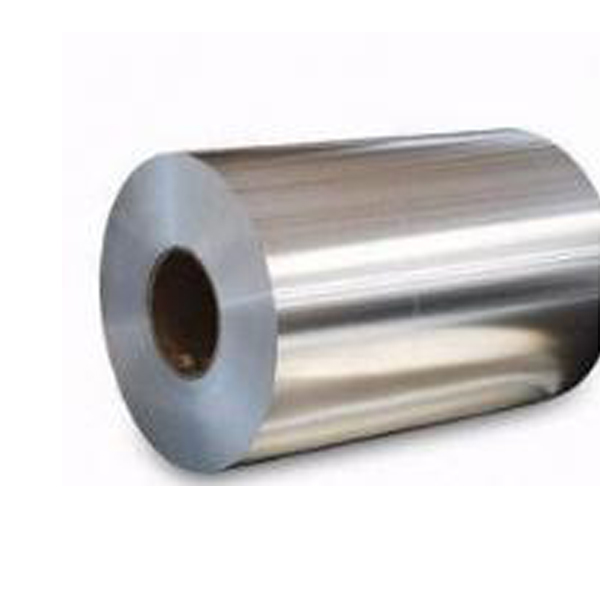
The operation transforms a large, heavy master unit into manageable, narrower strips. The process begins at the uncoiler. Here, a wide master Aluminum Coil is loaded and safely unwound under carefully controlled tension. This flat material is then threaded through a precision-engineered setup consisting of two parallel arbors equipped with highly specialized circular rotary knives and rubber stripper rings.
As the metal passes between these upper and lower blades, it is sheared continuously into multiple narrower strands simultaneously. Following the cutting phase, the newly separated strips pass through a tension stand. This critical component ensures that each individual strip is wound tightly and uniformly before being secured onto a recoiler drum. The exact configuration of the rotary knives and the tension control throughout this continuous process dictate the final quality of the output.
In metallurgy and machining, allowable variation in a physical dimension is everything. For example, if a specification calls for a width of 12.000 inches with an allowable variance of plus or minus 0.005 inches, any measurement outside that window is a failure.
This exactness serves as the primary indicator of a processing company's equipment quality, maintenance standards, and operational expertise. Achieving strict limits requires perfectly maintained knives, rigid machine arbors, and sophisticated software to calculate clearances. If a processor cannot maintain tight limits, it typically indicates outdated machinery, worn tooling, or a lack of rigorous quality control protocols.
Not all manufacturing applications require the exact same level of dimensional accuracy. Understanding the distinction between standard and tight parameters allows procurement teams to balance material costs with production requirements effectively.
Industry-standard commercial parameters are generally acceptable for applications where the final product dimensions are flexible. Standard width variations typically range from plus or minus 0.010 inches to 0.030 inches, depending on the supplier and the specific alloy.
Conversely, precision is non-negotiable for automated processes. The metal procurement sector is currently experiencing a massive shift toward micro-precision manufacturing. Driven by the explosive growth in electric vehicle battery enclosures, advanced thermal management systems, and lightweight aerospace components, downstream manufacturers are increasingly demanding micro-variances. Traditional commercial standards simply no longer satisfy the rigorous demands of modern, high-speed automated assembly lines. In these advanced environments, tight Tolerance limits often range from plus or minus 0.005 inches down to an exacting 0.001 inches.
The relationship between the thickness of the material and the achievable dimensional accuracy is a critical physical constraint. As a general rule in machining, thicker materials are inherently more difficult to control during the shearing process.
Heavy-gauge metal requires significantly more shearing force. This force can cause microscopic deflections in the arbors or the rotary knives. Furthermore, thicker materials possess stronger internal stresses, causing the metal to expand or warp slightly immediately after being cut. Therefore, while a processor might easily guarantee a 0.003-inch variance on a light-gauge foil, achieving that same exactness on a heavy-gauge structural plate requires specialized, heavy-duty lines with reinforced arbors and advanced edge-control technology.
Procurement decisions based solely on the lowest upfront processing fee often ignore the severe downstream financial impacts of poor material quality. When you struggle with unstable material performance, the hidden costs quickly compound.
The most immediate financial consequence of poor processing is the generation of scrap. If a batch arrives at a facility and measures outside the specified parameters, it may be entirely unusable. Even if the material is marginally usable, inconsistent dimensions often force machine operators to manually trim excess material. Over the course of a high-volume production year, a mere two percent increase in scrap rate turns expensive, prime-grade metal into low-value scrap. This equates to tens of thousands of dollars in lost revenue.
Modern manufacturing relies heavily on predictability. CNC machines, roll formers, and progressive stamping presses are engineered to accept materials within a very specific dimensional window. Picture a high-speed progressive stamping press running at full capacity. If the incoming strip swells by even a fraction of a millimeter in the middle of the run, the oversized metal will violently bind against the die clearances.
The resulting catastrophic jam requires halting the line, painstakingly clearing the mangled metal, and resetting the tooling. Resolving these jams extends far beyond ruined raw material. It includes expensive machine downtime, potential damage to precision dies, and delayed shipping schedules.
Beyond dimensional variations, poor control often introduces secondary edge defects that ruin the final product. Dull blades or improper knife clearances can create burrs. These are sharp, microscopic jagged edges along the side of the metal strip.
When a burred Aluminum Sheet is subjected to bending or stamping, those edge imperfections act as stress concentrators. This leads to micro-cracks and structural failure in the finished part. Additionally, improper tensioning can cause a ruffled appearance along the edge. This destroys the cosmetic finish of architectural panels and prevents the material from lying flat during subsequent fabrication steps.
Transitioning from a standard supplier to a precision partner requires an investment in quality. However, the return on investment is realized rapidly on the factory floor. High-quality Slitting acts as a catalyst for overall manufacturing efficiency.
When material arrives exactly to specification, it integrates seamlessly into existing automation. Roll forming operations function optimally when the dimensions are perfectly consistent from the outside diameter to the inside diameter. The rollers apply uniform pressure, resulting in perfectly straight profiles without twisting or bowing. Similarly, in stamping operations, precise strips ensure perfect alignment with pilot holes and indexing pins, maximizing the speed and output of the press.
Machine operators spend a significant portion of their shifts setting up equipment for new production runs. When operators cannot trust the dimensions of their raw materials, they are forced to spend hours micromanaging the machine guides, adjusting tensioners, and running test scraps.
Providing production teams with precision-cut materials causes setup times to plummet. Operators can set the machine guides to the nominal dimension with absolute confidence. This reduction in manual rework directly increases the Overall Equipment Effectiveness of the facility, allowing manufacturers to dedicate more labor hours to actual production.
Buyers frequently evaluate different metal cutting processes based on their specific project requirements. Understanding the technical distinctions between these methods is essential for optimizing procurement strategies.
Rotary cutting is inherently designed for high-volume, continuous manufacturing. Because it utilizes circular knives that cut the material as it unspools, these lines can process thousands of feet of metal per minute. This makes it the superior choice for operations that feed continuous strips into roll formers or tube mills.
In contrast, shearing is a linear cutting process typically used to cut large master plates into smaller, flat rectangular pieces. It is a slower, start-and-stop operation best suited for low-volume custom fabrication. Blanking involves using a specialized press and die to punch specific shapes out of a metal strip. While blanking is fast for mass-producing identical flat parts, it requires a massive initial investment in custom tooling.
To aid in decision-making, the following table outlines the general characteristics of each processing method:
Processing Method | Dimensional Control | Scrap Generation | Ideal Application |
|---|---|---|---|
Rotary Cutting | Very Tight (+/- 0.005 inches) | Very Low (Continuous edge trim only) | High-volume roll forming, continuous stamping |
Shearing | Standard (+/- 0.030 inches) | Moderate (Depends on sheet layout) | Low-volume custom fabrication, prototyping |
Blanking | Extremely Tight (+/- 0.002 inches) | High (Webbing left between punched parts) | High-volume specific part manufacturing |
Rotary processing provides the optimal balance for buyers needing continuous, tight-width materials. It generates minimal scrap, typically only a tiny sliver of edge trim from the master unit, making it highly cost-effective.
Securing high-quality material requires clear, unambiguous communication between the purchasing department and the metal processor. Vague purchase orders are the leading cause of production failures.
When drafting a purchase order, specifying the nominal dimension is insufficient. Buyers must explicitly state the acceptable limits based on their engineering requirements. For instance, consider sourcing a popular 3003 or 5052 alloy with a thickness of 0.5mm. A purchase order should not simply read 1200mm wide strip. Instead, a precise order must state Coil Width: 1200mm, Variance: +0.1mm / -0.1mm. Clearly defining these mathematical boundaries removes all ambiguity and ensures the supplier sets their arbor tooling correctly before the run begins.
Width is not the only critical dimension. Secondary edge conditions are equally vital for successful processing. Buyers must educate themselves on these phenomena and specify acceptable limits on their orders.
Camber: This is the deviation of a side edge from a perfectly straight line, essentially a bowing effect along the length of the strip. High camber causes the metal to weave back and forth as it feeds into a machine.
Burr: The rough, raised edge left by the shearing action. Specifications should note the maximum allowable burr height, such as a maximum of 10 percent of the material thickness.
Edge Wave: Ripples along the edge caused by improper tensioning during recoiling. Defining flatness requirements prevents the material from buckling in sensitive machinery.
The quality of your raw material is directly tied to the capabilities of your chosen processing partner. Vetting a supplier requires looking beyond the price per pound and examining their technological infrastructure.
Not all facilities operate with modern equipment. You should seek partners who utilize state-of-the-art lines equipped with computerized tooling software. This technology calculates the exact clearance and shim requirements for the rotary knives, completely removing human error from the setup process. Furthermore, advanced lines feature deep loop pits and sophisticated tension control systems that allow individual strips to hang freely, equalizing tension and eliminating the risk of edge wave.
A premium supplier does not rely on guesswork. They rely on empirical data. When evaluating a partner, inquire about their inline measurement tools. The best processors use continuous, non-contact laser micrometers that monitor the width and thickness of the strip in real-time, instantly flashing out-of-spec warnings to operators if deviations occur.
Additionally, mandate the provision of Material Test Reports and dimensional inspection logs with every shipment. A reliable partner will gladly provide documented proof, backed by Statistical Process Control data, guaranteeing compliance before the material ever leaves their loading dock.
Proper material processing requires exact precision, acting as the foundation for your overall manufacturing success. Getting the dimensions right saves money, while strict limits prevent costly machine downtime. If you are experiencing inconsistent material performance, it is time to upgrade your supply chain. Evaluate your current requirements and explore high-precision, reliable materials tailored to your exact specifications by visiting leading manufacturers like ewhalu.com to safeguard your production schedules today.
Standard commercial variances generally range from plus or minus 0.005 inches to 0.010 inches. However, precision processing can achieve tight limits of 0.001 to 0.003 inches. The exact achievable limit depends heavily on the material thickness, the temper of the metal, and the technological capability of the supplier's machinery.
Yes. While requesting precision limits may incur a slightly higher upfront processing fee, it drastically reduces total manufacturing costs. Tight parameters minimize material scrap, eliminate costly machine downtime caused by feeding jams, and reduce the labor hours spent on rework and machine setup. This ultimately lowers your total cost of ownership.
Rotary cutting is a continuous shearing process designed to cut long master units into narrower, continuous strands. This makes it highly efficient for high-volume, automated production. In contrast, cutting or shearing flat plates is typically a discrete, linear process used to produce pre-measured blanks for low-to-medium volume custom fabrication.
Inconsistent widths and edge defects are usually the result of outdated machinery, dull or improperly ground rotary knives, and incorrect knife clearances. Additionally, improper tensioning during the recoiling process or human error during the manual setup of the slitter head can induce edge wave, excessive burrs, and severe camber.
The temper, or hardness, of the metal significantly impacts how it shears. Softer tempers, like O or H111, are gummy and can cause material to drag on the blades, increasing the risk of burrs. Harder tempers, such as H18 or T6, shear more cleanly but require greater machine force and perfect knife clearances to prevent micro-fractures along the cut edge.
The minimum width depends entirely on the specific capabilities of the processing machine and the thickness of the material. While standard lines might only cut down to 1 or 2 inches, highly specialized narrow-width machines can process thin-gauge foils down to fractions of an inch, often as narrow as 0.25 inches or less for specific electronics or automotive applications.


