
- All
- Product Name
- Product Keyword
- Product Model
- Product Summary
- Product Description
- Multi Field Search
Views: 0 Author: Site Editor Publish Time: 2026-05-20 Origin: Site


What if the material holding up your solar farm or reinforcing your wind turbine was actually holding back the entire project's economics? It's not a hypothetical question—it's a real issue that renewable energy engineers confront every time they specify structural metals. Steel might seem like the default structural choice, but in many renewable applications, it's aluminum bars that deliver the optimal balance of strength, weight, resistance to corrosion, and lifecycle value that makes clean energy projects financially viable.
This article examines the specific roles these components play across the renewable energy landscape, from photovoltaic mounting systems to offshore wind structures and emerging energy storage technologies. We'll analyze alloy selection, structural engineering considerations, and real-world performance data from installed projects.
You'll come away with a detailed understanding of which profiles and alloys suit each application, why they outperform alternatives in lifecycle terms, and how to source them effectively for your next clean energy project without compromising on quality or schedule.
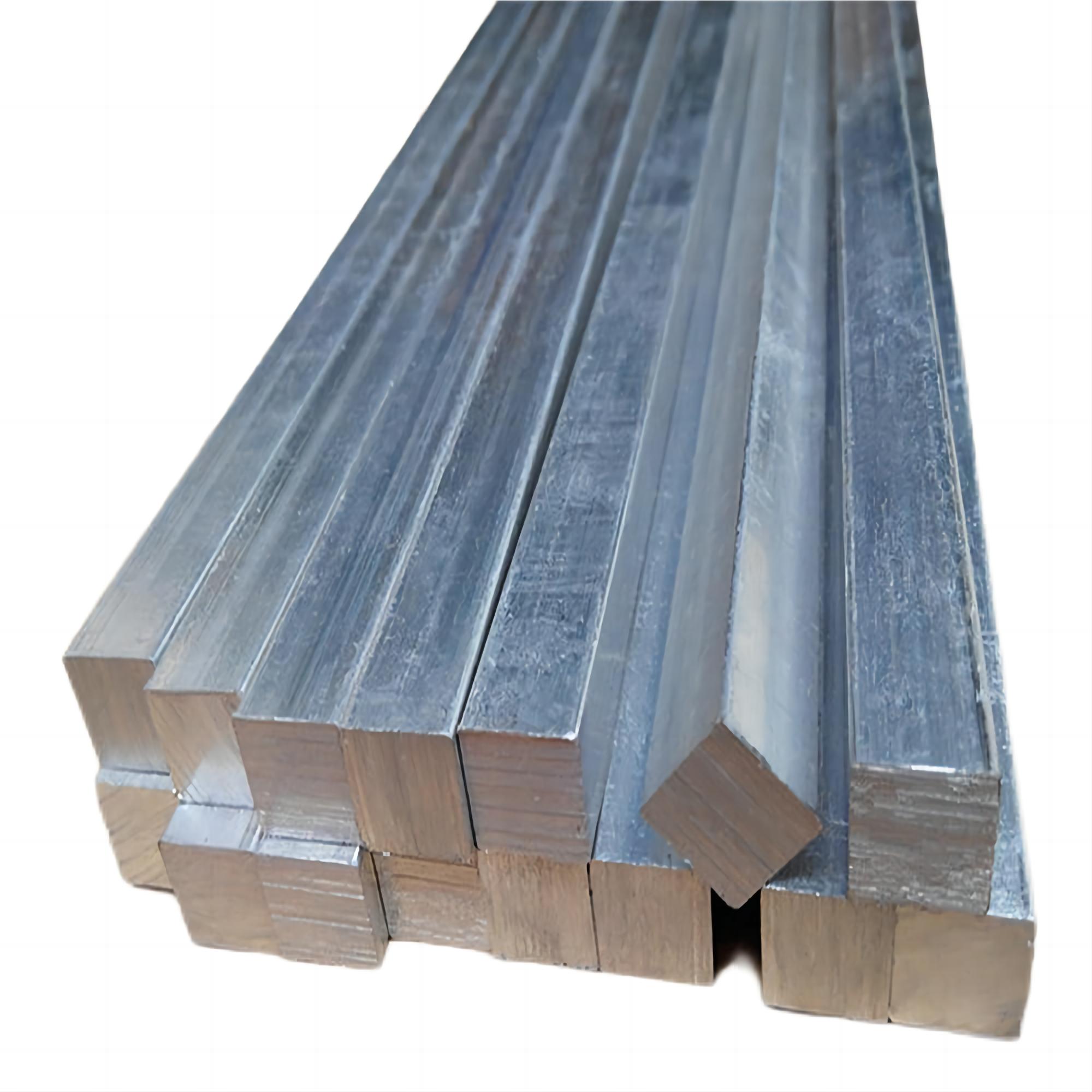
Aluminum bars serve as the skeletal framework for countless renewable energy installations around the world. In solar farms, they form the rails, brackets, and support structures that hold photovoltaic panels at precise angles toward the sun. In wind energy, they appear in nacelle frameworks, tower reinforcement systems, and blade root connection hardware. Their high strength-to-weight ratio makes them ideal for elevated structures where every kilogram of weight translates into larger foundations, more expensive cranes, and longer installation timelines. The Aluminum Square Bar is particularly valued in these structural applications because its uniform cross-section provides predictable load distribution in all directions, simplifying structural analysis and connection design for engineers who must certify the safety of installations that operate for decades.
Beyond structural roles, certain aluminum bars function as critical electrical conductors in renewable energy systems. Busbars in solar inverters, battery energy storage systems (BESS), and power distribution panels carry high currents efficiently from generation to grid connection. The electrical conductivity (approximately 61% IACS for common alloys) combined with low density makes aluminum the economically optimal conductor for high-current, weight-sensitive applications. While copper conducts better per unit cross-section, aluminum delivers equivalent current capacity at roughly half the weight and significantly lower material cost—a decisive advantage in large-scale energy installations where conductor runs can span hundreds of meters and material savings accumulate rapidly across the project.
Square cross-section bars are the most widely specified profile in solar mounting systems globally, and for good reason. Their symmetrical shape provides equal bending strength in both axes, simplifying structural calculations and connection hardware design. In solar farms, these aluminum aluminum bars in 6063-T5 and 6005-T5 alloys are the industry standard for rail and bracket fabrication. These alloys offer excellent extrusion characteristics, good resistance to atmospheric corrosion, and the ability to achieve precise cross-sectional dimensions that are critical for compatibility with standardized connection hardware used across the solar industry. The uniform profile also facilitates automated assembly in large-scale solar farm construction, where thousands of identical connections must be made efficiently by installation crews working against tight project schedules.
When loads are predominantly unidirectional—such as cantilevered solar panel arms or wind turbine component brackets—rectangular bars offer material efficiency advantages over square profiles. By orienting the longer dimension perpendicular to the load direction, engineers achieve higher bending stiffness with less material weight, reducing both material cost and the structural loads that propagate down to foundations. The Aluminum Rectangular Bar in alloys like 6061-T6 provides the strength needed for these directional load applications while maintaining the durability essential for outdoor energy installations that must perform for 25-30 years without maintenance intervention. This material efficiency is particularly important in utility-scale projects where even small per-unit savings multiply across thousands of mounting points.
Hexagonal bars serve as starting stock for CNC-machined renewable energy components—mounting brackets, bushings, shaft adapters, and connector hardware that connect the major structural elements. The hex shape provides flats for chucking during machining operations, and the material's excellent machinability (particularly in 6061 and 2011 alloys) allows tight-tolerance production of custom connection components. Angle bars provide L-shaped profiles ideal for bracing, corner reinforcement, and connection plates. In wind turbine tower sections, angle profiles serve as internal mounting rails for service platforms, cable trays, and access ladder brackets—components that must resist corrosion for decades in environments where maintenance access is limited and expensive, making the material's natural durability a critical specification requirement.
In renewable energy, weight is money—and it's not just the material cost itself. Every kilogram of structural material requires a corresponding increase in foundation size, support capacity, and installation equipment capacity. Aluminum bars weigh approximately one-third of equivalent steel sections, and this weight advantage cascades through the entire project economics: smaller concrete foundations, lighter lifting equipment, faster installation crew work, and lower transportation costs from factory to remote project sites. A utility-scale solar farm using aluminum mounting structures can save 15-20% on total installation costs compared to equivalent galvanized steel systems, primarily through reduced labor and equipment expenses. These are not theoretical savings—they're documented across thousands of installed projects worldwide and represent real money that improves project economics and investor returns.
Steel renewable energy structures require galvanizing, painting, or other protective coatings to resist atmospheric corrosion—all of which add cost, manufacturing complexity, and eventual maintenance obligations that compound over the project lifetime. The natural oxide layer provides inherent protection without any supplementary treatment. In most terrestrial renewable energy environments, bare bars maintain their integrity and appearance for decades. For coastal or industrial atmospheres, anodizing or simple chemical conversion coatings provide additional protection at far lower cost and complexity than the multi-layer coating systems required by steel. This difference becomes particularly significant for installations in remote locations where maintenance access is difficult and expensive—precisely the conditions typical of many solar and wind farm sites where sending a maintenance crew requires specialized equipment and favorable weather windows.
Renewable energy projects are fundamentally about sustainability, and the materials they use should reflect that philosophy consistently. Aluminum is 100% recyclable without any degradation in quality, and recycling requires only 5% of the energy needed for primary production. At end-of-life—which for solar farms is typically 25-30 years—aluminum bar mounting structures can be fully recycled into new products, recovering substantial material value that partially offsets decommissioning costs. This circular economy compatibility isn't just environmentally responsible; it's increasingly a requirement in renewable energy project financing and permitting processes, where material lifecycle impact is evaluated alongside energy generation performance and carbon footprint metrics.
When bars serve as conductors in energy systems, their thermal conductivity becomes a functional advantage rather than just a material property. High-current busbars generate heat proportional to their resistance, and the ability to dissipate that heat helps maintain safe operating temperatures without additional cooling systems. In solar inverter enclosures and BESS cabinets, busaluminum aluminum bars are often designed with sufficient cross-section to both carry current and act as heat spreaders, eliminating the need for separate cooling components and reducing system complexity, cost, and potential failure points in a single engineering decision.
Modern solar mounting systems are precision-engineered structures that must maintain panel alignment within fractions of a degree over decades of thermal cycling and wind loading. Fixed-tilt ground-mount systems use aluminum rails to support panels at optimal angles, while single-axis and dual-axis tracker systems rely on machined components for the pivot and drive mechanisms that adjust panel orientation throughout the day to maximize energy capture. Dimensional stability under thermal cycling is critical here—mounting structures experience temperature swings of 50°C or more daily, and the material must maintain alignment without excessive expansion, contraction, or long-term creep that could reduce energy output over time. The coefficient of thermal expansion of 6000-series alloys is well-characterized and can be accurately accounted for in structural design calculations.
Wind turbines present some of the most demanding structural requirements in the renewable energy sector. While the tower and blades are typically steel or composite, aluminum bars appear throughout the nacelle—in framework supports, cable management systems, service platforms, and cooling system components that must operate reliably in a vibrating, thermally cycling environment. Offshore wind turbines face salt spray exposure that demands exceptional corrosion resistance, and the proven performance of aluminum in marine environments makes it the preferred material for internal nacelle components that must last 20-25 years without replacement in locations where maintenance access requires specialized vessels and favorable weather windows that may only occur a few times per year.
While solar and wind dominate the renewable energy conversation, hydroelectric and geothermal installations also use these components in important structural and functional roles. In hydroelectric plants, they appear in intake structures, gate frames, and walkway systems where resistance to corrosion is essential for components that are constantly exposed to water and humid conditions. Geothermal applications leverage the thermal conductivity in heat recovery systems where geothermal fluids transfer energy to working fluids through heat exchange elements. In both cases, the combination of durability and low maintenance requirements makes this material a practical choice for installations that may operate for 50+ years in remote locations with limited maintenance access, where sending a repair crew requires significant logistical planning and expense that far exceeds the incremental cost of specifying a more durable material from the very outset of the project design phase.
The rapidly growing BESS market is a significant consumer of aluminum bars in dual structural-electrical roles. Battery modules use bars as both structural frames supporting cell groups and electrical busbars connecting those cells in series and parallel configurations. The combination of conductivity, lightweight, and thermal management capability makes aluminum uniquely suited for this dual function. In large-scale grid storage installations, busbar systems carry thousands of amps between battery racks and power conversion equipment, and the thermal conductivity helps distribute heat evenly across the system, preventing hot spots that could accelerate battery degradation or create safety hazards in enclosed cabinet installations.
Specification | EW Halu Aluminum | Competitor A (Galvanized Steel) | Competitor B (Stainless Steel) | Industry Average |
|---|---|---|---|---|
Density (g/cm³) | 2.7 | 7.85 | 7.9 | 5.0 |
Strength-to-Weight Ratio | Excellent | Moderate | Good | Good |
Corrosion Resistance (outdoor) | Excellent (no coating) | Good (with galvanizing) | Excellent | Good |
Maintenance Requirement | None | Inspect galvanizing 10-15 yr | None | Low |
Recyclability at End-of-Life | 100% (high value) | 100% (low value) | 100% (moderate value) | 100% |
Installation Speed | Fast (lightweight) | Slow (heavy) | Slow (heavy) | Moderate |
Thermal Conductivity (W/m·K) | 160-237 | 50 | 16 | 80 |
25-Year Lifecycle Cost | Lowest | Moderate | Highest | Moderate |
The comparison reveals why these profiles dominate terrestrial solar mounting and are increasingly specified in wind and storage applications. The combination of zero maintenance, fast installation, high scrap value at end-of-life, and low total lifecycle cost makes aluminum the economically rational choice for most renewable energy structural applications where long-term performance justifies the initial material investment.
Global solar PV capacity is projected to reach 5,000 GW by 2030, up from approximately 1,600 GW in 2023. Each gigawatt of new capacity requires hundreds of tons of mounting structures, and this unprecedented demand growth is reshaping the supply chain. Major extruders are expanding capacity specifically to serve the solar market. Offshore wind capacity is expected to grow sixfold by 2030, and the global BESS market is growing at over 25% annually—each creating distinct new demand profiles for aluminum bar products that require suppliers to adapt their production and inventory strategies. For buyers, this means engaging suppliers early in the project planning phase to secure production capacity and ensure timely delivery without premium expediting charges.
As renewable energy projects increasingly require documented sustainability credentials for financing and permitting, the ability to provide certified material documentation becomes a genuine competitive advantage. Suppliers who can document alloy composition, recycled content percentage, country of origin, and environmental product declarations (EPDs) enable project developers to meet the material documentation requirements of green building certifications and ESG-focused investment frameworks that increasingly govern project finance decisions. This documentation capability is becoming a differentiating factor in supplier selection for renewable energy projects where material provenance and lifecycle impact are evaluated alongside traditional performance and cost criteria, and where investors, regulators, and community stakeholders alike demand transparency about the environmental footprint of clean energy infrastructure throughout the entire supply chain from raw material extraction through manufacturing, installation, operation, and eventual end-of-life recycling.
Match alloy and temper to your specific application: 6063-T5 or 6005-T5 for solar mounting rails, 6061-T6 for higher-load structural components, and 6061-T6 or 2011-T3 for machined tracker components. Specify surface treatment based on environment—mill finish for most terrestrial installations, anodizing for coastal and offshore sites. Verify dimensional tolerances carefully, especially for high-volume assembly operations where inconsistent dimensions can cascade into connection problems across an entire project. Working with an ISO 9001-certified supplier who provides dimensional inspection reports and maintains stock inventory eliminates quality and delivery risk. For large renewable projects, plan procurement 8-12 weeks ahead and consider strategic stock agreements to lock in pricing and production slots in an increasingly competitive supply market.
A: They offer a combination that steel can't match: one-third the weight (reducing foundation and installation costs), inherent corrosion resistance (eliminating the need for galvanizing or painting), and faster on-site assembly using standard tools. Over a 25-year solar farm lifecycle, aluminum mounting structures typically deliver lower total cost of ownership than galvanized steel alternatives when maintenance and replacement costs are factored in.
A: Yes, when properly engineered and alloyed. Profiles in 6061-T6 offer yield strengths exceeding 240 MPa, which is sufficient for many structural applications within wind turbine nacelles and internal tower systems. While they don't replace steel for primary tower structures, they're the optimal choice for internal components where weight savings and corrosion resistance provide clear advantages in an environment that demands decades of maintenance-free performance.
A: For coastal environments with salt spray exposure, anodizing (Type II, AA15-20) provides the best balance of protection and cost. Chemical conversion coatings offer a lower-cost alternative for moderately corrosive environments. Mill-finish material is adequate for inland installations but not recommended for coastal or offshore sites where chloride exposure is continuous and would gradually degrade untreated surfaces.
A: They carry equivalent current at approximately half the weight and 30-40% lower material cost compared to copper. The trade-off is that larger cross-sections are needed to match copper's conductivity, which means more space. For most BESS applications where space constraints are moderate and weight and cost matter, aluminum is the preferred choice. Copper is typically reserved for compact, high-density designs where space is the primary constraint.
A: Standard sizes and alloys are generally available from stock with 5-10 day delivery. Custom extrusions and special alloys typically require 3-6 weeks for production. For large renewable energy projects, it's advisable to engage suppliers early in the design phase—8-12 weeks before material is needed on site—to secure production slots and ensure timely delivery without premium charges.
A: Yes, and they retain significant scrap value. Material from decommissioned solar mounting structures is 100% recyclable and commands high scrap prices due to its known alloy composition and clean condition. This recyclability is increasingly factored into renewable energy project financial models, with scrap value partially offsetting decommissioning costs and supporting the circular economy narrative that's central to renewable energy's value proposition.
Aluminum bars are not merely a material choice in renewable energy—they're an enabling technology that makes many clean energy projects economically viable. Their unique combination of lightweight, corrosion resistance, electrical conductivity, and infinite recyclability makes them indispensable across solar, wind, energy storage, and other clean energy sectors. As global renewable energy capacity accelerates toward ambitious decarbonization targets, the demand for high-quality aluminum bars will grow in parallel. For engineers and procurement professionals working in this sector, understanding the specific performance characteristics, alloy options, and sourcing best practices isn't optional—it's essential for delivering projects that are structurally sound, economically optimized, and truly sustainable over their full lifecycle. For organizations committed to building the clean energy infrastructure that the world needs, specifying the right materials at the outset isn't just engineering best practice—it's an investment in the reliability and sustainability that define the renewable energy sector's promise to future generations. The modular nature of aluminum bar-based mounting systems also allows for easier decommissioning and site restoration at end-of-life, which is an increasingly important consideration in project permitting where land use agreements may require full site restoration after the operational period concludes, and where the cost of decommissioning must be factored into project financial models from the outset.


