
- All
- Product Name
- Product Keyword
- Product Model
- Product Summary
- Product Description
- Multi Field Search
Views: 0 Author: Site Editor Publish Time: 2026-05-18 Origin: Site


Did you know that untreated aluminum exposed to coastal salt spray can develop visible pitting within just six months? It's a sobering reality for anyone specifying metal for outdoor projects. Meanwhile, anodized aluminum parts in the same environment often look virtually unchanged after 20 years. That contrast isn't marketing spin—it's materials science at work, and it matters enormously for project longevity and lifecycle cost.
This article digs into the mechanisms behind the impressive corrosion resistance and durability of anodized finishes, especially in demanding outdoor settings. We'll unpack the electrochemistry, compare it with alternatives, and walk through real-world applications where the choice of surface treatment literally makes or breaks a project's success.
By the end, you'll understand exactly why this surface treatment outperforms other finishes outdoors, how to select the right type for your environment, and what to look for when sourcing from a reliable supplier who stands behind their product quality.
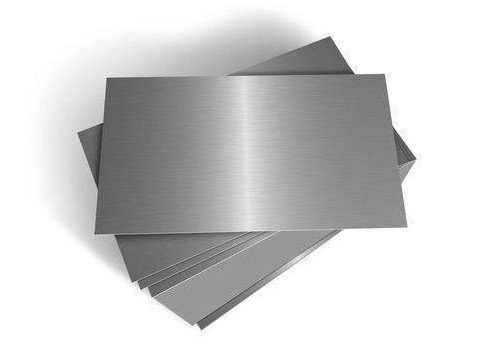
Anodized aluminum isn't created by applying a coating on top of metal—it's a transformation of the material itself. During the process, the component becomes the anode in an electrolytic cell, typically using sulfuric acid as the electrolyte. A direct current passes through the bath, and oxygen ions migrate to the surface, reacting with the base metal to grow a thick, dense layer of aluminum oxide (Al₂O₃). The anodized aluminum oxide layer grows both into and out of the substrate by roughly equal amounts, meaning it's integrally bonded—there's no interface where it can delaminate or peel. The process is controlled, repeatable, and produces a finish whose thickness can be specified to within a few microns. That precision matters when you're designing components that need to withstand aggressive outdoor environments for decades without intervention.
The resulting oxide film is what gives this finish its corrosion resistance superpower. Aluminum oxide is chemically inert, electrically insulating, and extremely hard. Unlike paint or powder coat, which can chip and allow corrosive agents underneath, the anodized aluminum layer is part of the metal itself. It blocks moisture, oxygen, chlorides, and other corrosive species from reaching the bare substrate beneath. Think of it as a fortress wall that's fused directly to the castle—it can't be separated without destroying the structure beneath. What's more, the oxide layer is non-conductive, which means anodized aluminum prevents the galvanic currents that drive electrochemical attack when different metals are in contact. This dual protection—physical barrier plus electrochemical insulation—is something no applied coating can replicate, and it's the fundamental reason why anodized surfaces endure where others fail.
This is the workhorse of the industry and the most common specification for outdoor architectural and industrial applications. Type II produces oxide layers typically between 5 and 25 microns thick. For most outdoor applications in moderate climates—urban environments, inland locations, areas with regular rainfall but no direct salt exposure—Type II with proper sealing provides excellent corrosion resistance. It's the standard you'll find on architectural window frames, consumer electronics housings, and general-purpose outdoor hardware. When sealed correctly, Type II parts regularly pass 336+ hours in neutral salt spray testing per MIL-PRF-8625F, which corresponds to roughly 15-20 years of real-world coastal exposure. The cost-effectiveness of Type II makes it the default choice for the vast majority of outdoor projects where extreme conditions aren't expected.
When the going gets truly tough, Type III steps in. Hard coat treatment builds oxide layers from 25 to 100+ microns, creating a surface so dense and thick that it can withstand extreme environments—offshore platforms, marine hardware, chemical processing equipment, and military applications. The thicker, more compact structure resists not just corrosion but also abrasion and wear. In salt spray tests, properly sealed hard coatings can exceed 1,000 hours without showing attack on the base metal. That's the kind of performance that engineers specify when component failure could mean structural compromise or safety hazards. For projects where failure isn't an option and maintenance access is limited, Type III is the definitive choice that provides genuine peace of mind over decades of service.
New thin-film anodizing technologies are expanding the options available to specifiers who need more protection than mill finish provides but don't require the full thickness and cost of standard Type II treatment. These processes create controlled oxide layers of 1-5 microns that offer meaningfully better performance than bare metal at costs closer to mill finish. While not suitable for harsh marine environments, thin-film treatments are finding applications in semi-outdoor spaces like parking structures, covered walkways, and transit shelters where the aesthetic and protective benefits justify a modest cost premium over bare metal but where full architectural anodizing would be over-specified. Nano-ceramic sealing technologies are also advancing rapidly, offering the ability to extend the salt spray resistance of conventional coatings beyond 2,000 hours—a performance level that was unachievable just a few years ago and that opens new possibilities for the most demanding outdoor applications where even standard Type III may not provide sufficient margin of safety.
Not every outdoor application demands heavy-duty protection. Decorative treatments produce thinner oxide layers (under 10 microns) that still offer significantly better performance than bare metal. These finishes are common in consumer products, lighting fixtures, and architectural trim where aesthetics matter as much as function. The color stability of electrolytically colored finishes is remarkable—pigments sit inside the oxide pores rather than on the surface, so they resist UV fading far better than any painted finish. For indoor-outdoor transitional spaces like covered entries and parking structures, decorative anodizing often provides the right balance of protection and visual appeal without the cost of heavier specifications.
Here's something that surprises many specifiers: anodized surfaces don't need repainting, refinishing, or protective waxing to maintain their performance outdoors. The oxide layer is permanent. In contrast, painted surfaces typically require recoating every 5-7 years in harsh environments, and powder coat systems can chalk and degrade within a decade. Facades installed in the 1960s still perform today—try finding a painted surface that can make the same claim. For building owners and facility managers, this maintenance-free longevity translates directly into predictable operating budgets and dramatically reduced lifecycle costs that compound year after year.
Sunlight destroys most organic coatings. UV radiation breaks down polymer chains in paint and powder coat, causing chalking, fading, and eventual erosion of the protective layer. The oxide layer is inorganic—it's essentially ceramic. UV rays have zero effect on aluminum oxide. Electrolytically colored finishes retain over 95% of their original color after 10 years of outdoor exposure, while painted surfaces typically retain only 60-70%. If your project is in a high-UV region—the Middle East, Australia, the American Southwest—this isn't a minor detail. It's the difference between a facade that looks the same in year 20 as it did on day one, and one that's chalky, faded, and in need of complete refinishing at significant expense.
One of this material's most underappreciated qualities is that it naturally re-passivates. If the oxide layer gets scratched or locally damaged, the exposed surface immediately begins forming a new oxide film in the presence of air. This self-healing behavior doesn't restore the full thickness, but it does prevent attack from spreading aggressively from a scratch point. It's a backup defense mechanism that painted surfaces simply don't have—once paint is scratched, the bare metal underneath is completely vulnerable until the paint is reapplied. This characteristic alone can prevent minor cosmetic damage from escalating into structural concerns.
The anodizing process is water-based and produces no volatile organic compounds. The resulting finish is fully recyclable with the substrate—no need to strip coatings before recycling, unlike painted or plastic-coated metals. For projects targeting green building certifications like LEED or BREEAM, the low environmental footprint is a genuine asset, not just marketing talk. The material's infinite recyclability without quality degradation aligns with circular economy principles that are increasingly embedded in construction procurement standards worldwide, and it's becoming a decisive factor in material specification for environmentally conscious projects.
The primary defense is straightforward but powerful: the oxide layer acts as a physical barrier between the substrate and the environment. Its dense, compact structure after sealing leaves virtually no pathways for moisture, chlorides, or pollutants to penetrate. This barrier function is thickness-dependent, which is why Type III hard coat outperforms Type II in aggressive environments—the wall is simply thicker and harder to breach. Sealing fills the microscopic pores, converting the porous structure into a near-impermeable surface that blocks ionic transport and prevents the electrochemical reactions that drive corrosion.
Beyond the physical barrier, the oxide is electrically insulating. This means it prevents the flow of galvanic currents that could otherwise drive electrochemical corrosion. When the treated surface contacts dissimilar metals—copper, steel, or stainless—the oxide blocks the electron transfer needed for galvanic attack. Painted surfaces, by contrast, can develop pinholes that allow localized galvanic cells to form, leading to rapid under-film corrosion that's difficult to detect until it's extensive and expensive to remediate. The insulating property of anodized aluminum eliminates this failure mode entirely.
The process creates a porous oxide structure, and without sealing, those pores are pathways for corrosive agents. Hot water sealing hydrates the oxide, converting it to boehmite (AlO·OH), which expands and fills the pores. Nickel acetate sealing offers even greater chemical stability. A well-sealed 10-micron coating actually outperforms a poorly sealed 25-micron one—this isn't theory, it's documented testing data. This is why specifying sealing quality matters as much as specifying thickness. Skimping on sealing is a false economy that shows up years later as premature degradation, and it's one of the most common specification oversights in outdoor projects.
Curtain walls, window frames, roofing panels, and facade cladding represent the single largest application for anodized finishes outdoors. Buildings in coastal cities like Dubai, Singapore, and Miami rely on these facades that endure relentless salt-laden air without degradation. The Aluminum Anodized Sheet products used in these applications typically carry AA15 or AA20 classifications (15-20 micron thickness), which are proven to deliver 25+ years of service in coastal and industrial atmospheres. The light weight also reduces structural loading on building frames compared to glass or stone alternatives, and the zero-maintenance characteristic eliminates the ongoing operational costs that burden painted facades.
Docks, boardwalks, lighthouse components, and coastal railings face some of the harshest conditions on Earth. Salt spray, constant humidity, and biological fouling create a perfect storm for metal degradation. Hard-coated profiles resist these conditions remarkably well. The Aluminum Anodized Profile used in marine handrails and structural supports, when treated to Type III specifications, can endure saltwater splash zones for decades with minimal maintenance—something that would be economically impractical with painted steel alternatives that require periodic recoating in difficult-to-access marine environments.
Solar farms in desert and coastal locations need mounting structures that can withstand intense UV, temperature cycling, and airborne salts. Anodized framing has become the default choice for utility-scale solar installations precisely because it maintains structural integrity and appearance without degradation over the 25-30 year design life. Bridge railings, highway sound barriers, and transit station canopies similarly benefit from the combination of corrosion resistance and lightweight properties. In northern climates where road salt is a fact of life, these components outlast painted steel by significant margins, reducing both maintenance costs and traffic disruption from repair work. This is particularly important in regions experiencing accelerating coastal development, where buildings that were once in mild inland environments are now exposed to increasing levels of airborne chlorides from expanded port facilities and industrial activity.
Specification | EW Halu Anodized | Competitor A (Painted) | Competitor B (Powder Coat) | Industry Average |
|---|---|---|---|---|
Salt Spray Resistance (hours) | 1000+ (Type III) | 250-500 | 500-750 | 500 |
UV Color Retention (10 yr) | 95%+ | 50-60% | 70-80% | 65% |
Service Life Outdoors (years) | 25-30 | 8-12 | 12-18 | 15 |
Maintenance Cycle | None | Repaint 5-7 yr | Inspect 8-10 yr | Repaint 7-10 yr |
Self-Healing Ability | Yes | No | No | No |
Recyclability (with finish) | 100% | Requires stripping | Requires stripping | Partial |
Coating Adhesion Failure Risk | Near zero | Moderate (chipping) | Low-moderate | Moderate |
This comparison makes one thing clear: while painted and powder-coated alternatives offer adequate protection for many applications, anodized aluminum delivers a fundamentally different level of performance because it's part of the metal itself, not something applied to it. When you're evaluating options for a project that needs to perform for 25+ years without intervention, that distinction matters enormously and should drive your specification decision.
The global green building materials market is projected to exceed $600 billion by 2028, and anodized aluminum products are riding that wave. Architects increasingly specify these finishes because they contribute to LEED credits for both material recyclability and low-VOC manufacturing. Over 40% of new commercial construction projects in Europe specified anodized aluminum for exterior cladding in 2025—up from roughly 28% five years ago. Solar and wind energy installations are also accelerating worldwide, and both sectors are heavy consumers for structural components in remote, maintenance-inaccessible locations where coating failure is not an option.
First, match oxide thickness to your corrosion zone. For mild inland environments, AA10-15 is generally sufficient. Coastal and industrial areas demand AA20-25. For extreme marine or offshore exposure, specify Type III hard coat at 40+ microns. Second, always request sealing quality test results—the standard dye spot test (ISO 2143) or admittance test (ISO 2931) provides quantitative verification. A poorly sealed coating will fail prematurely regardless of thickness. Third, choose the right alloy: 5000 and 6000 series produce the most consistent and attractive results. The Aluminum Anodized Pipe in 6063 alloy, for example, provides both excellent treatment response and strong performance for outdoor piping. Finally, consider total cost of ownership: the anodized aluminum option costs 15-30% more upfront but eliminates decades of maintenance expense, almost always winning the lifecycle cost calculation for outdoor projects of any significant scale.
A: Properly specified and sealed anodized aluminum surfaces typically last 25-30 years in outdoor applications without requiring refinishing. In moderate climates, service life can extend well beyond 30 years. The key factors are oxide thickness matched to the environment, proper sealing quality, and appropriate alloy selection for the given conditions.
A: Yes, but you need to specify the right parameters. For saltwater splash zones and direct marine atmospheres, Type III hard coat at 40+ microns with high-quality sealing provides the best performance. Type II at AA20 can work in near-coastal environments but may show cosmetic changes over extended periods in direct, continuous salt spray exposure.
A: Not at all. Treated surfaces are significantly harder than bare material—Type II reaches HV200-300 and Type III exceeds HV400 on the Vickers scale, compared to roughly HV60-100 for untreated surfaces. While not scratch-proof, anodized aluminum resists everyday handling marks, cleaning abrasion, and wind-blown particle erosion far better than any alternative short of ceramic coating.
A: Anodizing creates an integral oxide layer that's part of the metal itself, while powder coating applies a polymer layer on top of the surface. The anodic finish won't chip, peel, or delaminate, and it's completely UV-stable. Powder coating offers more color options but can chip, chalk under UV exposure, and eventually requires refinishing. For maximum outdoor longevity with zero maintenance, anodizing is the superior choice by a significant margin.
A: Request sealing quality test results from your supplier. The dye absorption test (ISO 2143) and admittance test (ISO 2931) are the standard verification methods. A properly sealed coating should show minimal dye absorption and low admittance values. Never accept anodized material for outdoor use without documented sealing certification—it's the single most important quality control checkpoint.
A: Absolutely. The anodic finish is fully recyclable with the substrate without stripping. The oxide layer is so thin relative to the base metal that it has negligible impact on the recycling process or the quality of recycled material. This is a significant advantage over painted or plastic-coated alternatives, which typically require costly coating removal before recycling can proceed.
The corrosion resistance of anodized finishes in outdoor environments isn't just good—it's fundamentally different from any applied coating system. The integral oxide layer provides permanent, self-renewing, UV-immune protection that no paint or powder coat can match over the decades-long service lives that outdoor projects demand. For architects, engineers, and procurement professionals specifying materials for outdoor applications, this surface treatment represents the intersection of proven performance, environmental sustainability, and long-term value. Whether you're designing a coastal high-rise facade, specifying marine infrastructure, or mounting structures for a desert solar farm, the science is unambiguous: anodized aluminum delivers outdoor corrosion resistance that truly endures.


