
- All
- Product Name
- Product Keyword
- Product Model
- Product Summary
- Product Description
- Multi Field Search
Views: 0 Author: Site Editor Publish Time: 2026-05-21 Origin: Site


Here's a question that catches even experienced engineers off guard: if both mill-finished and anodized products have an oxide layer on the surface, why does one corrode in a few years while the other lasts decades? The answer isn't obvious, and getting it wrong can mean the difference between a project that endures and one that needs expensive remediation within a decade.
This article provides a thorough, evidence-based comparison of mill-finished and anodized aluminum, examining the science behind each surface condition, their practical performance differences across real applications, and the specific scenarios where each finish is the appropriate specification choice.
By the end, you'll be able to confidently specify the right finish for any application, understanding not just what the differences are but why they matter and how they translate into measurable performance and cost outcomes over a project's lifetime.
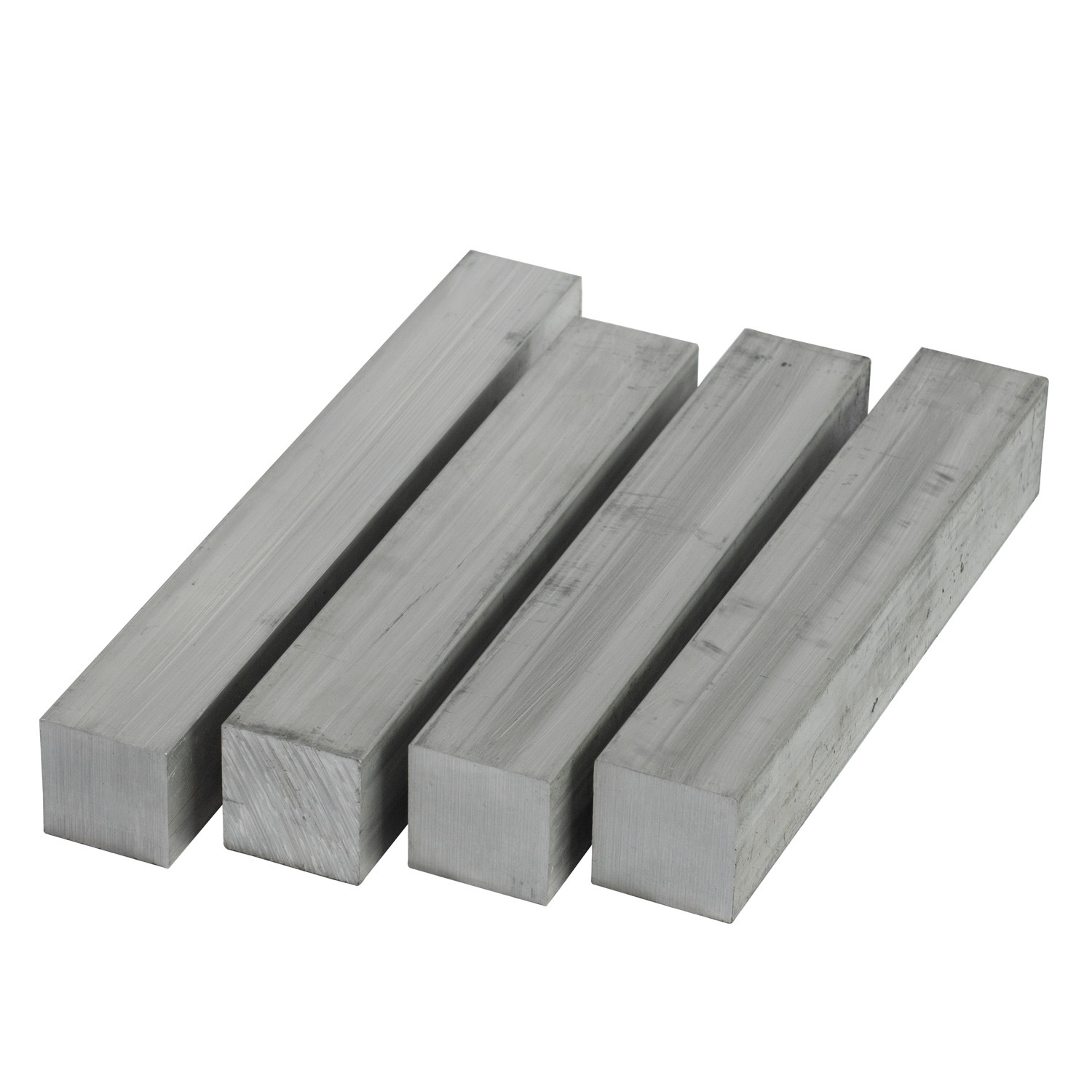
Mill-finished aluminum refers to material that comes directly from the rolling mill or extrusion press without any additional surface treatment beyond standard cleaning. It retains the natural appearance created by the manufacturing process—which typically means a slightly reflective but somewhat inconsistent surface with visible rolling or extrusion lines. There's no chemical processing, no coating application, and no mechanical polishing involved. What you see is what the mill produced, and for many applications, that's perfectly adequate. The Aluminum Square Bar, available in mill finish among other surface options, exemplifies this straightforward approach—no additional processing between the extrusion press and the customer, which keeps costs at their lowest and delivery times at their shortest.
Even mill-finished products aren't truly bare metal at the atomic level. Upon exposure to air, aluminum spontaneously forms a thin (2-5 nanometer) oxide film across its surface. This natural oxide provides a modest degree of corrosion protection—it's the reason the material doesn't rust like steel and can survive in dry indoor environments indefinitely. However, this layer is extremely thin, non-uniform in thickness, and offers limited resistance to aggressive environments. It's enough to prevent rapid atmospheric corrosion in mild conditions, but it's wholly inadequate for outdoor, marine, or chemically exposed applications where sustained protection is required over years or decades of service life.
Anodizing is an electrochemical process that dramatically thickens the natural oxide layer in a controlled, repeatable manner. The component becomes the anode in an electrolytic cell—hence the name "anodizing"—with sulfuric acid (typically) as the electrolyte. When current flows through the cell, oxygen ions migrate to the surface and react to form a controlled, uniform oxide layer. This layer grows both into and out of the substrate, creating a coating that's integrally bonded to the base metal—there's no adhesive interface where separation can occur. Typical anodic thicknesses range from 5 microns (thin decorative) to 100+ microns (hard coat), compared to the 0.002-0.005 microns of the natural oxide. That's a difference of three to four orders of magnitude in protective barrier thickness.
The anodic layer differs from the natural oxide in three critical ways that directly affect real-world performance. First, it's orders of magnitude thicker—1,000 to 20,000 times thicker—providing correspondingly greater barrier protection against corrosive species. Second, it's far more uniform and controlled, engineered for specific performance characteristics rather than forming randomly in ambient conditions. Third, it has a unique columnar pore structure that can be filled with dyes (for color) and sealants (for maximum corrosion resistance), giving the surface aesthetic and protective capabilities that natural oxide simply doesn't possess. The Aluminum Anodized Sheet exemplifies these advantages, offering a surface that's dramatically harder, more corrosion-resistant, and more visually consistent than any mill-finished alternative.
This is the most consequential difference and the one that most directly affects project outcomes and total cost of ownership. Mill-finished aluminum relies on its 2-5 nm natural oxide for protection—sufficient for indoor, dry environments but inadequate for outdoor or marine exposure. Anodized aluminum, with controlled oxide layers of 10-100+ microns, provide resistance that's incomparably superior. In neutral salt spray testing (ASTM B117), mill-finished 6063 may show corrosion within 24-48 hours, while properly sealed anodized material of the same alloy withstands 336-1,000+ hours depending on thickness and sealing quality. That's not a minor improvement—it's a fundamentally different level of performance that changes what's possible in outdoor and marine applications where long-term durability is required.
The oxide in an anodic coating is one of the hardest substances commonly used in manufacturing—significantly harder than the underlying substrate. Type II surfaces reach HV200-300 on the Vickers scale; Type III hard coat exceeds HV400-500. Mill-finished material, by contrast, typically measures HV60-100. This hardness gap means anodized surfaces resist scratching, abrasion, and wear far better, maintaining their appearance and protective function through years of handling, cleaning, and environmental exposure. For applications subject to physical contact—architectural hardware, consumer products, equipment housings—this difference directly translates into longer service life and better appearance retention that affects both aesthetics and the continued effectiveness of the corrosion barrier.
Mill-finished material has a variable appearance—rolling or extrusion marks, slight color variations between production batches, and an overall non-uniform look that may be acceptable for hidden structural components but rarely for visible surfaces where aesthetics matter. Anodized aluminum provides a controlled, uniform finish with consistent color and gloss level across entire production runs. The difference is immediately visible when you place mill-finished and anodized samples side by side—the treated surface has a depth and uniformity that mill finish simply cannot achieve. For architectural applications, consumer products, and any visible component, this visual consistency is often the deciding factor in specification decisions.
The chemical resistance profiles of mill-finished and anodized surfaces differ significantly, and this difference directly affects which environments each finish can tolerate. Mill-finished aluminum's thin natural oxide offers limited protection against both acidic and alkaline solutions. Strong acids (pH below 4) and strong alkalis (pH above 9) can dissolve the natural oxide and attack the underlying metal. Anodized surfaces, by contrast, tolerate a much broader pH range—typically from pH 4 to pH 9 for Type II and even wider for properly sealed Type III hard coat. This expanded chemical resistance makes anodized products suitable for industrial environments where incidental exposure to mild acids, alkalis, or solvents would degrade mill-finished surfaces over time. For food processing plants, chemical manufacturing facilities, and marine environments, this chemical resistance advantage is often the decisive factor in the specification decision, and it's one that many specifiers overlook until they encounter premature failure in the field.
This difference is frequently overlooked but critically important in electrical and electronic applications. Mill-finished aluminum maintains full surface electrical conductivity—the natural oxide is so thin that it doesn't impede current flow at connection points. Anodized products, however, have an electrically insulating oxide layer that prevents surface conduction entirely. For busbars, electrical connectors, grounding components, and any application requiring electrical contact, mill finish is typically required. If anodizing is needed for protection on an electrical component, connection points must be masked during the process or machined afterward to expose bare material for reliable electrical contact.
Both mill-finished and anodized products maintain the excellent thermal conductivity of the base metal through the substrate—the anodic layer doesn't change bulk material properties. However, the oxide layer itself has lower thermal conductivity (approximately 30 W/m·K) compared to the base (approximately 237 W/m·K for pure material). For heat sinks and thermal management components, mill-finished provides marginally better thermal performance because there's no insulating barrier between the metal and the surrounding air. That said, the practical thermal difference is small for typical anodic thicknesses (5-25 microns) and is often offset by the increased surface emissivity of anodized surfaces, which improves radiative heat dissipation—a factor that can actually make anodized heat sinks more effective in certain configurations where radiation plays a significant role in total heat transfer.
Anodizing changes part dimensions, and this must be accounted for in precision manufacturing. The oxide layer grows outward from the surface by approximately half the total thickness. A 20-micron coating increases each surface dimension by about 10 microns per side. For most structural applications, this dimensional change is negligible. But for precision-machined parts with tight tolerances—think aerospace components, optical housings, or precision fixtures—the change must be accounted for in the manufacturing plan. Either pre-compensate the machined dimensions or machine critical features after anodizing. Mill-finished material has no such dimensional variability, which simplifies manufacturing planning and quality control processes, reducing the risk of tolerance stack-up issues in complex assemblies.
Mill-finished material can be welded directly without surface preparation beyond standard solvent cleaning. Anodized products cannot be welded without removing the oxide layer from the weld zone—the coating's high melting point (2,050°C vs. 660°C for the base metal) and insulating properties prevent proper fusion. This means fabrication sequences matter significantly: if welding is required after anodizing, the weld areas must be masked during the process or the layer must be mechanically removed before welding. For complex assemblies involving both welded and anodized components, it's usually more practical to complete all welding in mill-finish condition and then anodize as a final step, treating the surface treatment as the last manufacturing operation.
Mill-finished is the right specification when cost efficiency, electrical conductivity, or further processing requirements take priority over surface appearance or maximum protection. Busbars and electrical conductors need bare surfaces for reliable, low-resistance connections. Internal structural components hidden from view don't justify the added cost of anodizing. Components destined for further surface treatment—painting, powder coating, plating, or mechanical finishing—start as mill-finished stock. The Aluminum CNC Profile represents an interesting middle ground: precision-machined components that may be specified in either mill finish (for subsequent treatment by the customer) or pre-anodized (for immediate deployment in visible or corrosive service), depending on the end-use requirements.
Anodized aluminum is the right choice whenever the component faces outdoor exposure, requires visual consistency, needs wear resistance, or must maintain appearance over decades without maintenance intervention. Architectural facades, marine hardware, consumer electronics housings, food processing equipment, and automotive trim all benefit from the combination of permanent protection, surface durability, and aesthetic quality. The Aluminum Anodized Pipe demonstrates these advantages in piping applications where both corrosion resistance and appearance matter—outdoor railings, visible process piping, and architectural elements where mill-finished pipe would quickly deteriorate and create an unsightly, potentially unsafe condition.
Specification | EW Halu Anodized | Competitor A (Mill-Finish) | Competitor B (Painted) | Industry Average |
|---|---|---|---|---|
Corrosion Resistance (outdoor) | Excellent | Poor-Moderate | Good | Moderate |
Surface Hardness (HV) | 200-500+ | 60-100 | 100-150 | 150 |
Appearance Consistency | Excellent | Variable | Good | Good |
Color Options | Limited (integral) | None (natural) | Unlimited | Moderate |
UV Stability | Excellent | Moderate (oxidation) | Poor-Moderate | Moderate |
Electrical Surface Conductivity | Insulating | Conductive | Insulating | Varies |
Dimensional Precision | Requires compensation | Direct | Requires compensation | Varies |
Recyclability (with finish) | 100% | 100% | Requires stripping | Partial |
Relative Cost | 1.15-1.3x | 1.0x (baseline) | 1.2-1.5x | 1.1-1.3x |
Maintenance-Free Lifespan (outdoor) | 25-30 years | 5-10 years | 10-15 years | 12-15 years |
Architects are increasingly specifying anodized products for building exteriors, driven by sustainability certifications and proven long-term performance in demanding climates. The global market for architectural applications is growing at approximately 6% annually. At the same time, new hybrid surface treatments are expanding the options between traditional mill finish and full anodizing. Thin-film processes that create oxide layers of 1-3 microns offer enhanced protection at costs closer to mill finish. Plasma electrolytic oxidation (PEO) creates ceramic-like surfaces that exceed conventional anodizing in both hardness and chemical resistance, opening possibilities for applications where even hard anodizing isn't sufficient for the service environment.
For specifiers on the fence about whether to invest in anodizing, a straightforward cost-benefit analysis often resolves the question convincingly. Consider a building facade component with a 25-year design life: mill-finished might cost $10 per linear foot but require repainting every 7-8 years at $4 per foot per cycle, totaling approximately $22 in maintenance costs over 25 years. Anodized aluminum at $13 per foot requires zero maintenance over the same period, saving $19 per foot in total lifecycle cost. At scale—for a project using 10,000 linear feet—that's $190,000 in avoided maintenance expense. Add the reduced risk of coating failure, the avoided disruption to building operations during maintenance, and the higher scrap value at end-of-life, and the economic case for anodizing becomes compelling for any outdoor project of significant scale or duration where lifecycle economics matter and where the cost of premature failure extends far beyond simple material replacement.
The single most important factor is the service environment. Indoor, dry, and mild conditions? Mill finish is probably adequate. Any outdoor exposure, moisture, or chemical contact? Anodizing is almost certainly the right choice. Coastal or marine environments? Specify Type III hard coat at 40+ microns. Consider lifecycle cost, not just material price—anodizing adds 15-30% upfront but eliminates decades of maintenance expense. Match the finish to your fabrication sequence: components requiring post-treatment welding or machining are typically processed in mill-finish condition and anodized as a final step. And always verify anodizing quality through sealing tests and thickness measurements before accepting delivery for critical applications where premature failure would have significant consequences.
A: No, and that's an important distinction. Anodizing adds cost and creates an electrically insulating surface. For indoor, non-visible, or electrically conductive applications, mill-finished is often the better and more economical choice. Anodizing is superior when corrosion resistance, appearance consistency, wear resistance, or outdoor durability are required performance attributes.
A: It can, but with significant limitations and risk. Mill-finished surfaces will develop oxidation, discoloration, and potential pitting in outdoor environments, especially in coastal or industrial areas with airborne pollutants. It's sometimes acceptable for hidden structural components or short-term installations, but for visible surfaces or long-term outdoor use, anodizing or another protective finish is strongly recommended.
A: Typically 15-30% to the base cost, depending on the type (Type II vs. Type III), thickness specification, color requirements, and order volume. Hard coat (Type III) costs more than standard treatment (Type II). When evaluating cost, consider the total lifecycle expense—anodizing often saves money over time by eliminating maintenance, repainting, and premature replacement costs that mill-finished outdoor components would incur.
A: Not without surface preparation. The oxide layer has an extremely high melting point and acts as an electrical insulator, both of which prevent proper welding fusion. To weld anodized material, you must first remove the layer from the weld zone—either by masking those areas before treatment or by mechanically removing the coating afterward. The more common and reliable approach is to complete all welding before anodizing, treating the surface finish as the final manufacturing step.
A: It depends entirely on the application environment. For dry indoor use, the natural oxide layer provides sufficient protection against normal atmospheric conditions. For outdoor or corrosive environments—anywhere with moisture, salt, or chemical exposure—some form of surface treatment is necessary: anodizing, chemical conversion coating, painting, or powder coating. The appropriate protection depends on the severity of the environment and the required service life.
A: Mill-finished has a variable, slightly dull appearance with visible manufacturing marks from rolling or extrusion—streaks, lines, and slight color variations are normal. Anodized aluminum has a more uniform, consistent appearance with a subtle depth to the surface that mill finish lacks. A practical test: apply a small amount of salt water and measure surface resistance with a multimeter. Mill-finished aluminum shows very low resistance (conductive); anodized shows very high resistance (insulating) due to the oxide layer.
The choice between mill-finished and anodized isn't about one being universally superior to the other—it's about matching the right surface finish—mill-finished aluminum or anodized aluminum—to the application's real-world demands and lifecycle requirements. Mill-finished aluminum offers the lowest cost, simplest manufacturing workflow, and full electrical conductivity, making it ideal for internal, non-corrosive, or further-processed applications where surface appearance isn't a factor. Anodized aluminum adds a permanent, integrally bonded oxide layer that transforms surface performance, delivering corrosion resistance, hardness, UV stability, and visual consistency that no applied coating system can match over decades of service. Understanding these differences—and specifying the right finish for each application—is the foundation of smart, cost-effective material selection in aluminum product design and procurement. Whether you're specifying material for a single component or an entire building system, taking the time to evaluate surface finish requirements against actual service conditions is an investment in project success that pays returns for decades. Making the right surface finish decision at the specification stage is far less expensive than correcting it after installation, when remediation costs can exceed the original material savings many times over.


