
- All
- Product Name
- Product Keyword
- Product Model
- Product Summary
- Product Description
- Multi Field Search
Views: 0 Author: Site Editor Publish Time: 2026-08-03 Origin: Site


In industrial fabrication, aerospace, and structural engineering, material specification errors directly correlate to structural failures, excessive weight, or blown budgets. Engineers and procurement teams frequently encounter the terms "sheet" and "plate" used interchangeably on the shop floor. This casual usage obscures critical differences in thickness, load-bearing capacity, and fabrication limits. Specifying the wrong material profile leads to catastrophic buckling under load or unnecessary weight penalties that ruin project margins. We need a strict technical evaluation of aluminum sheet and aluminum plate, focusing on dimensional thresholds, mechanical properties, and fabrication realities to ensure accurate material specification.
The Thickness Threshold: The industry-standard dividing line is 0.250 inches (6.35 mm)—anything thinner is sheet; anything this thickness or greater is plate. Note that European and international markets often round this threshold to 6.0 mm.
Production Process Divergence: Aluminum sheet relies primarily on cold-rolling for precise gauge control and surface finish, whereas aluminum plate is hot-rolled to achieve structural density and thickness before undergoing stress-relief tempering.
Fabrication Dynamics: Aluminum sheet excels in formability, bending, and continuous stamping, whereas aluminum plate is engineered for heavy machining, structural rigidity, and high-stress welding.
Cost and Yield: Sheet is typically sold in coils or standard cut sizes optimizing surface area, while plate procurement requires factoring in significant weight, handling costs, and machining scrap rates.
Application Overlap: Selecting the wrong profile often leads to either over-engineering (wasting money on unnecessary plate thickness) or under-specifying (risking structural integrity with sheet).
Engineers and procurement teams need exact dimensional boundaries to align with ASTM standards, European Norms (EN), and supplier inventories. The distinction between an Aluminum Sheet and a plate is not arbitrary. It is defined by strict industry standards that dictate how the material is manufactured, handled, and integrated into structural assemblies. When you order material for a fabrication run, knowing the exact gauge threshold prevents costly delays and material rejections at the receiving dock.
The standard thickness range for aluminum sheet starts at 0.008 inches (0.2 mm) and goes up to, but does not include, 0.250 inches (6.35 mm). Mills produce this material primarily through a cold-rolling manufacturing process. Multi-pass cold rolling achieves tight dimensional tolerances, enhanced tensile strength via work hardening, and superior surface finishes. The rollers compress the aluminum at room temperature, elongating the grain structure and increasing the material's hardness. Common delivery formats include continuous coils and flat cut sheets. The surface area-to-weight ratios heavily favor large-scale coverage, making it ideal for applications requiring extensive surface area without excessive weight, such as trailer siding or architectural panels.
Aluminum plate is defined by a standard thickness range of 0.250 inches (6.35 mm) and above. Fabricators often refer to this as heavy plate or thick plate. The production process involves hot-rolling and cold-finishing. Starting from massive cast ingots, mills hot-roll the aluminum at recrystallization temperatures. This allows massive deformation to achieve structural density without fracturing the metal. Thermal treatments and stress-relief stretching, such as Tx51 tempers, are critical. Stretching the plate relieves internal residual stresses, preventing the material from warping and distorting during subsequent heavy CNC machining.
To fully understand the spectrum of flat-rolled aluminum, we must differentiate aluminum foil, which is under 0.008 inches (0.2 mm) thick. This establishes the absolute lower boundary of sheet. Aluminum coil is simply continuous aluminum sheet, evaluated on the exact same thickness scale. Mills optimize coil for high-volume automated stamping, roll forming, and continuous processing lines where feeding individual flat sheets would be inefficient.
The American ASTM standard strictly defines the transition at 0.250 inches (6.35 mm). However, European (EN) and global standards often define the sheet-to-plate transition at exactly 6.0 mm. This discrepancy requires careful attention during international procurement. If a European drawing specifies a 6.0 mm plate, an American supplier might substitute a 0.250-inch plate, which is slightly thicker and heavier, potentially throwing off weight calculations in aerospace or marine applications.
Specification | Aluminum Sheet | Aluminum Plate |
|---|---|---|
Thickness (ASTM) | 0.008" to < 0.250" | 0.250" and above |
Thickness (EN/ISO) | 0.2 mm to < 6.0 mm | 6.0 mm and above |
Primary Process | Cold-Rolled | Hot-Rolled |
Delivery Format | Coils, Flat Sheets | Flat Plates, Blocks |
Key Characteristic | Formability, Surface Area | Structural Rigidity, Machinability |
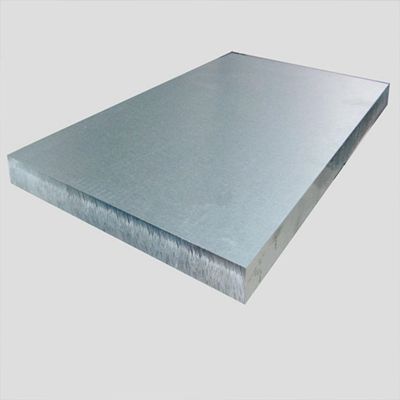
Translating physical dimensions and alloy characteristics into engineering outcomes dictates how the material will perform under stress and during fabrication. You cannot simply swap sheet for plate based on availability; the mechanical behavior of the metal changes drastically as thickness increases.
Aluminum sheet offers excellent bend radii capabilities. It accommodates complex forming, deep drawing, and flanging without cracking, depending on the specific alloy and temper. Press brake operators can easily fold thin sheet into complex brackets or enclosures. In contrast, an Aluminum Plate resists deformation. It exhibits low elasticity and requires specialized heavy-duty press brakes with massive tonnage to alter its shape. Attempting to bend thick plate with tight radii often results in severe cracking along the bend line.
Plate distributes heavy mechanical loads effectively, resists shear forces, and prevents deflection in structural frameworks. It forms the backbone of heavy machinery and load-bearing structures. Sheet has severe limitations in load-bearing scenarios. It is highly susceptible to buckling, oil-canning, or deflection under localized stress. If you apply a point load to a thin sheet, it will yield and deform almost immediately.
Certain alloys dominate specific thickness ranges based on their intended use.
Sheet-Dominant Alloys: 1100 is used for chemical equipment due to high purity. 3003 is the standard for general utility and sheet metal work. 5052 offers excellent marine corrosion resistance and formability.
Plate-Dominant Alloys: 6061-T6 is the industry standard for general structural use and machining. 7075-T651 provides ultra-high-strength for aerospace bulkheads and high-stress components.
Specialty Tempers: Plate often utilizes Tx51 tempers (stress-relieved by stretching) to ensure dimensional stability during heavy material removal.
Material choice dictates shop floor processes, tooling requirements, and cycle times. Understanding these realities prevents costly manufacturing errors and ruined tooling.
Aluminum plate is the standard for CNC machining. It holds tight tolerances, minimizes vibration and chatter, and allows for deep pocketing. Machinists can aggressively mill plate to create complex 3D geometries. Milling thin aluminum sheet is extremely difficult. The material is susceptible to lifting, tearing, warping, and chatter under the endmill. Sheet is far better suited for 2D profiling using laser cutting, waterjet, punching, or stamping presses.
Welding thin aluminum sheet presents severe thermal conductivity and heat-dissipation challenges. Fabricators face high risks of burn-through, warping, and heat-affected zone distortion. TIG welding thin sheet requires immense skill and precise amperage control. Welding aluminum plate is highly advantageous. The thick material functions as an excellent heat sink, allowing deeper weld penetration, multipass welds, and high-strength structural joints without physical distortion.
Alclad sheet configurations feature a high-strength core alloy metallurgically bonded with high-purity aluminum cladding layers for galvanic corrosion resistance. However, these cladding layers, typically 2% to 10% of total sheet thickness, add dead weight without contributing to load-bearing structural strength. This severely impacts aerospace weight budgets. Regarding anodizing, thick aluminum plates tolerate longer chemical etching and anodizing bath times. Thin sheets require precise control to avoid surface degradation or complete dissolution in aggressive acid baths.
Assessing the total value involves looking beyond the raw material price per pound and considering material yield, logistics, and availability on the shop floor.
Nesting parts on high-surface-area aluminum sheet maximizes material yield. Laser cutting software can pack dozens of flat parts onto a single sheet with minimal waste. Conversely, machining complex parts out of thick aluminum plate results in massive scrap rates. Machinists sometimes shave away up to 80% of the raw material weight to achieve the final part geometry. You must factor this high scrap rate into the true material cost of the project.
Aluminum plate requires heavy material handling equipment. You need high-capacity forklifts, overhead cranes, and reinforced storage racks. Plate incurs high freight costs due to its extreme weight density. Aluminum sheet is handled as palletized flats or continuous coils. This reduces freight costs but makes the material highly susceptible to surface scratching, bending, or edge damage during transport. A single forklift bump can ruin an entire coil of thin sheet.
Sheet is highly commoditized and readily available in standard gauges at local service centers. You can usually get standard 4x8 sheets delivered next day. Custom plate thicknesses, non-standard alloys, or oversized heavy plates often require dedicated mill runs. These custom orders come with high minimum order quantities and extended lead times stretching into months.
Matching the material to the project requires a practical evaluation of the application's physical demands and the shop's fabrication capabilities.
Ideal use cases include aerospace fuselage skins, automotive body panels, consumer electronics enclosures, architectural cladding, roofing, and HVAC ductwork. Choose sheet when the project requires low weight, high surface area coverage, complex forming, and does not experience heavy structural load. If you need to bend it, stamp it, or cover a large area lightly, use sheet.
Ideal use cases include marine hulls, aerospace bulkheads, heavy machinery bases, military vehicle armor, structural base plates, and mold toolings. Choose plate when the project requires rigid structural support, heavy CNC machining, and high-stress dynamic load management. If you need to tap deep threads, mill deep pockets, or support heavy equipment, use plate.
Under-specifying by using sheet where plate is needed leads to catastrophic buckling or joint failure under load. Over-engineering by using plate where sheet suffices adds unnecessary structural weight and significantly increases material and machining costs. Always match the gauge to the exact structural requirement.
Evaluate your primary fabrication method, load requirements, and target weight budgets before requesting quotes. The choice between aluminum sheet and aluminum plate is governed strictly by the 0.250-inch (6.35 mm) thickness threshold and the resulting shift from formability to structural rigidity.
Evaluate primary fabrication methods (forming vs. machining) before specifying material.
Determine precise load requirements and target weight budgets for the project.
Request Material Test Reports (MTRs) to verify alloy properties and tempers.
Calculate total landed costs, explicitly including anticipated fabrication scrap.
A: According to ASTM standards, aluminum becomes plate at a thickness of 0.250 inches (6.35 mm). Anything thinner is considered sheet. However, in ISO and European systems, the transition is often strictly defined at 6.0 mm.
A: The discrepancy arises from the conversion between imperial and metric systems and historical regional manufacturing practices. International procurement teams must verify regional standard alignments to prevent gauge mismatches and ensure structural integrity.
A: Yes, aluminum coil is simply continuous aluminum sheet rolled into a coil for easier transport and automated manufacturing processes. It shares identical thickness properties and dimensional thresholds as flat sheet.
A: Aluminum sheet commonly utilizes formable alloys like 3003 and 5052, which are excellent for bending and shaping. Aluminum plate typically employs high-strength structural alloys like 6061 and 7075, designed for heavy machining and load-bearing applications.
A: You should only substitute sheet for plate if the application does not require the structural rigidity and load-bearing capacity of plate. Using sheet in a high-stress environment can lead to buckling, deflection, or catastrophic failure.


