
- All
- Product Name
- Product Keyword
- Product Model
- Product Summary
- Product Description
- Multi Field Search
Views: 0 Author: Site Editor Publish Time: 2026-08-06 Origin: Site


Material failure during press brake operations carries heavy operational costs. Micro-cracking, fracturing, and unpredictable springback turn profitable production runs into scrap piles. Fabricators and engineers face a constant challenge: balancing yield strength, elongation, and corrosion resistance when specifying materials for high-volume production or critical structural components. Selecting the right material is a necessity for maintaining structural integrity and production efficiency.
Selecting the correct alloy and temper is the single most critical variable in sheet metal fabrication. A highly formable material reduces wear on tooling and ensures predictable results on the shop floor. This guide provides a technical evaluation framework for shortlisting the optimal Aluminum Sheet for specific bending and forming applications.
5052-H32 is the industry standard: Offers the most reliable balance of high formability, moderate yield strength, and excellent corrosion resistance for general fabrication.
3003 prioritizes extreme workability: The optimal choice for deep drawing, tight bend radii, and intricate formed features where structural strength is a secondary requirement.
6061 and 2024 require strict bend radius management: Highly prone to cracking in their harder tempers (T6, T3/T4); require exceptionally large bend radii or annealing (O-temper) prior to forming.
Thickness dictates minimum bend radius: Thin aluminum sheet options allow for tighter bend radii, whereas thicker sheets exponentially increase the risk of outer-fiber fracturing.
Temper dictates success: An alloy’s temper (e.g., H32, T6, O) impacts elongation and springback as much as the base chemical composition.
The relationship between material thickness (t) and the minimum bend radius dictates whether a part survives the press brake. As material thickness increases, the stress on the outer face of the bend increases proportionally. Fabricators calculate the minimum bend radius as a multiple of the material thickness to ensure successful forming without outer-fiber fracturing. If you push a thick plate into a tight V-die, the outer fibers stretch beyond their tensile limits, resulting in immediate failure.
Thin stock under 0.080 inches exhibits high ductility, allowing for tighter bend radii. Thicker plates face strict bend radius constraints. Different alloy series dictate the minimum acceptable inside radius. Highly formable alloys tolerate much tighter bends than high-strength aerospace grades. For example, a 0.125-inch piece of 5052-H32 might require a 1.5t to 2t bend radius, while the same thickness in 6061-T6 demands a 4t to 6t radius to prevent snapping.
Alloy & Temper | Thickness Range (inches) | Recommended Minimum Bend Radius (t) |
|---|---|---|
3003-H14 | 0.016 - 0.125 | 0.5t - 1.5t |
5052-H32 | 0.016 - 0.125 | 1.5t - 2.5t |
6061-T6 | 0.016 - 0.125 | 4.0t - 6.0t |
2024-T3 | 0.016 - 0.125 | 5.0t - 7.0t |
There is a direct inverse relationship between yield strength and elongation percentages. As yield strength increases, the material's ability to stretch without fracturing decreases. Engineers evaluate this trade-off when selecting a material for complex forming operations. You cannot have maximum structural rigidity and maximum bendability in the same temper.
Baseline elongation requirements typically exceed 10-15% for a highly Formable Aluminum Sheet. Materials falling below this threshold are prone to cracking during standard press brake operations and require specialized tooling or larger bend radii. When reviewing material test reports, pay close attention to the elongation in 2 inches metric. A value of 12% or higher generally indicates a material that will behave predictably under the punch.
Bending perpendicular (transverse) to the material's grain direction prevents failure. The rolling process at the mill creates a distinct grain structure within the sheet, aligning the metallurgical structure in the direction of the roll. Bending across the grain distributes stress more evenly across these fibers, reducing the likelihood of tearing.
Longitudinal bending, or bending parallel to the grain, significantly increases the risk of cracking. The punch acts like an axe splitting wood along the grain. This risk is acute in harder tempers, where the material already possesses lower ductility. Fabricators plan part layouts on the nesting software to optimize grain orientation relative to the bend lines, even if it means sacrificing some material yield on the sheet.
Alloy selection directly affects the success of complex formed features beyond simple 90-degree bends. Louvers, flanges, and deep draws require materials with exceptional stretch and compression capabilities. Attempting these features with rigid alloys results in tearing or severe distortion around the tooling.
Flat hemming involves a 180-degree bend, pushing material to its absolute limits. Only highly ductile alloys withstand these operations without micro-cracking. Understanding the limits of your chosen material prevents committing to a design requiring extreme deformation that the shop floor cannot physically produce.
The 5052 alloy is a magnesium-alloyed, non-heat-treatable material. It stands as the industry standard for general fabrication due to its versatile mechanical properties. 5052-H32 provides the optimal intersection of strength, structural integrity, and bendability. It does not require post-weld heat treatment and maintains excellent corrosion resistance.
Best use cases for 5052 include marine components, electronic enclosures, chassis, and complex sheet metal parts. It reliably handles 90-degree bends without cracking, making it a staple in most fabrication shops. Operators prefer it because it behaves consistently from batch to batch, reducing the need for constant press brake adjustments.
Alloy 3003 is a manganese-alloyed, non-heat-treatable option. It offers superior elongation and formability compared to the 5xxx series. This extreme workability comes at the cost of significantly lower tensile strength. It feels softer under the punch and requires less tonnage to form.
This material is the optimal choice for deep drawing, spun parts, chemical equipment, and louvers. It excels in applications requiring near zero-radius bends on thin material where structural load-bearing is not the primary concern. If you need to hem an edge flat without any surface fracturing, 3003 is the go-to specification.
The 6061 alloy utilizes magnesium and silicon and is heat-treatable. It provides excellent structural strength but is notoriously difficult to bend in the common T6 temper. Attempting tight bends on 6061-T6 guarantees immediate fracturing. The material simply lacks the ductility to stretch around a standard punch tip.
To mitigate this risk, fabricators form the material in the annealed state (6061-O) and heat-treat it post-fabrication. Alternatively, utilizing exceptionally large bend radii (e.g., 4t to 6t) prevents cracking in harder tempers, though this limits design flexibility for tight enclosures.
Alloy 2024 is a copper-alloyed, heat-treatable aerospace grade. It boasts extremely high tensile strength but is highly susceptible to cracking during cold forming. Standard press brake operations are unsuitable for this material in its hardened state. It is designed for structural aircraft skins, not complex folded brackets.
Successful forming requires massive bend radii. For complex shapes, forming occurs exclusively in the fully annealed (O-temper) or freshly solution heat-treated (W-temper) condition before the material naturally ages and hardens at room temperature.
The 5083 alloy is a high-magnesium option designed for demanding environments. It retains good formability while offering higher strength than 5052. Its excellent corrosion resistance makes it a preferred choice for harsh marine conditions and industrial applications.
Best use cases include shipbuilding, pressure vessels, and heavy transport fabrication. It provides a robust solution where both structural integrity and moderate forming capabilities are required. It requires higher tonnage on the press brake compared to 5052, so operators must ensure tooling is rated for the load.
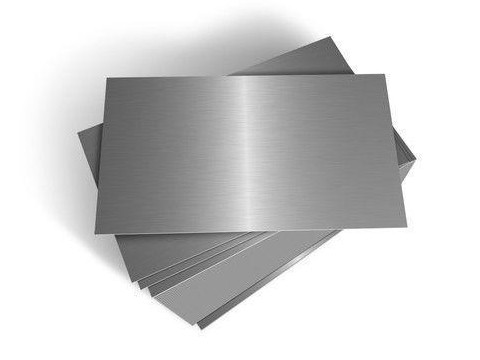
The O-temper designation indicates the material is fully annealed. This state provides the highest formability and lowest yield strength across all alloys, making it ideal for severe forming operations. Strain-hardened materials (H-tempers) offer increased strength but reduced ductility. The annealing process resets the grain structure, removing internal stresses built up during rolling.
The H-temper scale indicates the degree of strain hardening. H32 represents quarter-hard, while H34 is half-hard. This fractional hardness directly impacts the minimum bend radius; harder tempers require larger radii to prevent cracking. Fabricators must match the temper to the severity of the bend. Specifying H38 (full hard) for a part requiring multiple 90-degree bends will result in a 100% scrap rate.
O-Temper: Maximum ductility, lowest strength. Used for deep drawing and severe forming.
H32 (Quarter Hard): Excellent balance. Standard for general sheet metal bending.
H34 (Half Hard): Higher strength, requires larger bend radii. Used for shallow bends.
H38 (Full Hard): Minimal ductility. Avoid for bending operations unless using massive radii.
Forming T-tempers, such as T4 and T6, presents significant challenges. These heat-treated states maximize yield strength, which severely restricts elongation. Fabricators manage the forming process carefully to avoid catastrophic material failure. The material fights back against the punch, requiring higher tonnage and robust tooling.
Higher yield strengths in T-tempers result in proportional increases in material springback. Operators perform precise over-bending calculations to ensure the final part meets dimensional tolerances after the material relaxes. A 90-degree bend in 6061-T6 might require the punch to drive the material to 85 degrees to account for the 5 degrees of elastic recovery.
Micro-cracking at the bend line stems from exceeding the minimum bend radius, bending parallel to the grain, or utilizing an incompatible temper. Identifying these root causes is the first step in preventing material failure. Operators visually inspect the outer radius of the first article under magnification to catch micro-fractures before running the entire batch.
Actionable mitigation strategies include increasing the punch radius, adjusting the part layout to bend across the grain, or selecting a more ductile temper. Press brake operators verify material specifications before initiating the bending process. Switching from a sharp punch to a radius punch often solves minor cracking issues immediately.
Springback is influenced by alloy chemistry, temper, punch radius, and die width. Accurately predicting springback requires understanding how these factors interact during the bending cycle. Harder materials with higher yield strengths exhibit more springback than softer, annealed materials.
Tooling strategies play a vital role in managing unpredictable springback. Air bending allows for easier over-bending adjustments by controlling the punch depth. Bottoming forces the material into the die shape, reducing springback variations, though it requires higher tonnage and specific tooling setups matched exactly to the material thickness and angle.
Protecting the surface finish during forming is critical. Utilizing polished tooling, urethane dies, or protective vinyl films helps prevent galling, scratching, and surface marring. Aluminum is soft and easily picks up steel particles from standard dies, leading to cross-contamination and aesthetic defects.
Proper tooling selection ensures even pressure distribution along the bend line, reducing localized stress concentrations that lead to premature failure. Using a V-die that is too narrow for the material thickness forces the metal to draw heavily over the die shoulders, increasing the risk of cracking and severe marking.
Prototyping or small-shop operations require bending thin material without industrial brakes. Practical workarounds exist for achieving clean bends without heavy machinery. These methods rely on distributing the bending force over a larger area rather than concentrating it on a sharp edge.
Using radius blocks, soft-jaw clamps, and progressive hand-forming techniques prevents localized stress concentration and cracking. Clamping the sheet between two hardwood blocks with a pre-sanded radius allows you to manually fold the metal using a mallet, creating a clean bend without fracturing the outer fibers.
Standard alloys like 5052-H32 and 3003-H14 are ubiquitous and readily available from most metal suppliers. This wide availability ensures short lead times and competitive pricing for standard fabrication runs. You can order these grades from local service centers and have them on the shop floor the next day.
Specialized procurement is required for specific annealed grades, such as 6061-O. These materials carry premium costs and longer lead times, which must be factored into project planning and budgeting. Waiting weeks for a specific temper delays production schedules and increases inventory holding costs.
Specifying a slightly more expensive, highly formable alloy upfront reduces overall unit costs. Minimizing failure rates and scrap at the press brake improves production efficiency and lowers hidden manufacturing expenses. A cheaper, harder alloy that cracks 20% of the time costs more in the long run than a premium formable grade with a 0% failure rate.
Investing in the correct material initially prevents costly rework and delays. The cheapest raw material is not the most economical choice for complex forming operations. Factor in the cost of machine time, operator labor, and scrapped blanks when evaluating material quotes.
Prioritize 5052-H32 as the most reliable all-purpose choice for bending. Reserve 3003 for extreme forming or deep drawing applications. Avoid bending high-strength alloys like 6061 and 2024 at tight radii unless they are in the annealed state.
Request material test reports (MTRs) from your supplier to verify elongation properties before issuing purchase orders.
Conduct prototype bend tests on sample coupons to confirm tooling compatibility and springback calculations.
Adjust your flat pattern layouts to ensure all critical bends run perpendicular to the material grain direction.
Consult with your press brake tooling manufacturer to select the appropriate punch radius and V-die width for your specific alloy and thickness.
A: 5052-H32 is the best alloy for 90-degree bends. It offers an excellent balance of strength and formability, allowing it to handle tight radii without fracturing during standard press brake operations. It provides consistent results and requires minimal tooling adjustments.
A: Bending 6061-T6 without cracking is extremely difficult. It requires an exceptionally large bend radius, typically 4t to 6t. For tight bends, form the material in the annealed O-temper and perform post-fabrication heat treatment to restore its strength.
A: Yes, but with strict limitations. 2024 aluminum requires massive bend radii to prevent catastrophic cracking. For complex forming, it must be bent in the fully annealed (O-temper) or freshly solution heat-treated (W-temper) condition before natural aging occurs.
A: 3003 offers superior deep-drawing and hemming capabilities due to its extreme workability, but it has lower tensile strength. 5052 provides higher structural strength while maintaining excellent formability for standard bending operations, making it better for load-bearing parts.
A: Bend thin sheets manually using radius blocks and soft-jaw vices. Avoid sharp 90-degree workshop tools. Progressive hand-forming over a curved wooden or plastic block helps prevent localized stress concentration and material failure on the outer fibers.
A: Bending parallel to the grain increases the risk of cracking. Always aim to bend transverse, or perpendicular, to the grain direction. This distributes the bending stress evenly across the metallurgical fibers and prevents outer-fiber tearing.
A: The minimum bend radius is calculated as a multiple of the material thickness (t). The exact multiplier depends on the specific alloy, temper, and sheet thickness. Softer materials like 3003-H14 allow for tighter radii, while harder tempers require larger multipliers.


